
Ideas for
your next move.
Practical thinking for teams building software, securing systems and operating modern infrastructure. Explore our engineering field notes.
206 insights · Page 1 of 18
 ENGINEERING JOURNAL ↗
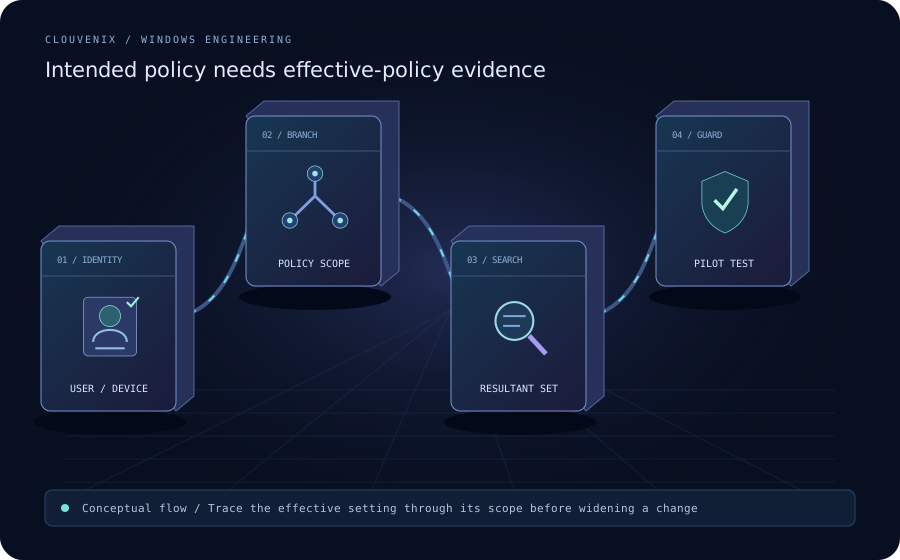
Windows Group Policy: find the effective setting before editing a GPO
Use resultant-policy evidence, scope and processing context to explain why a Windows setting differs, then validate a narrow policy correction on a pilot group.
Read field note ↗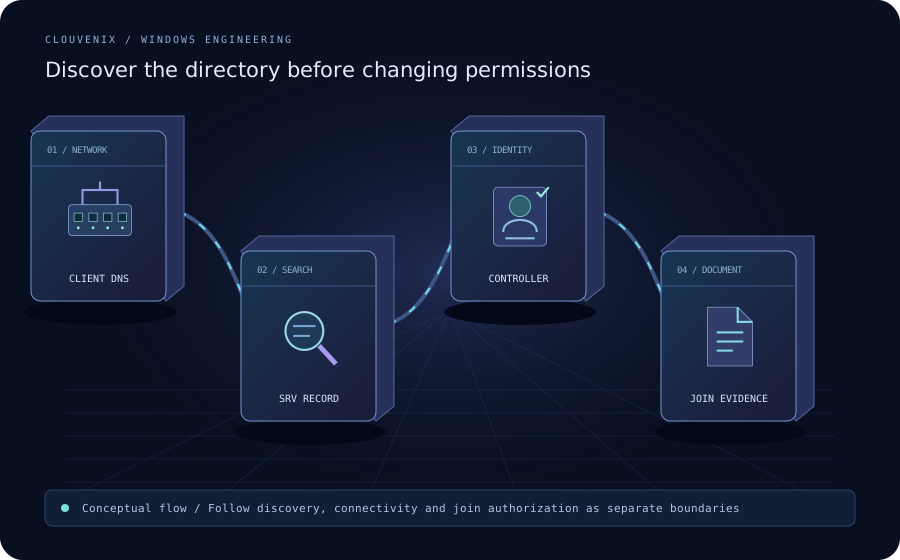 ENGINEERING JOURNAL ↗
Windows domain join: verify DNS and domain-controller discovery
Troubleshoot domain-join discovery with the client resolver, AD SRV records and the actual network path before changing account permissions or weakening protection.
Read field note ↗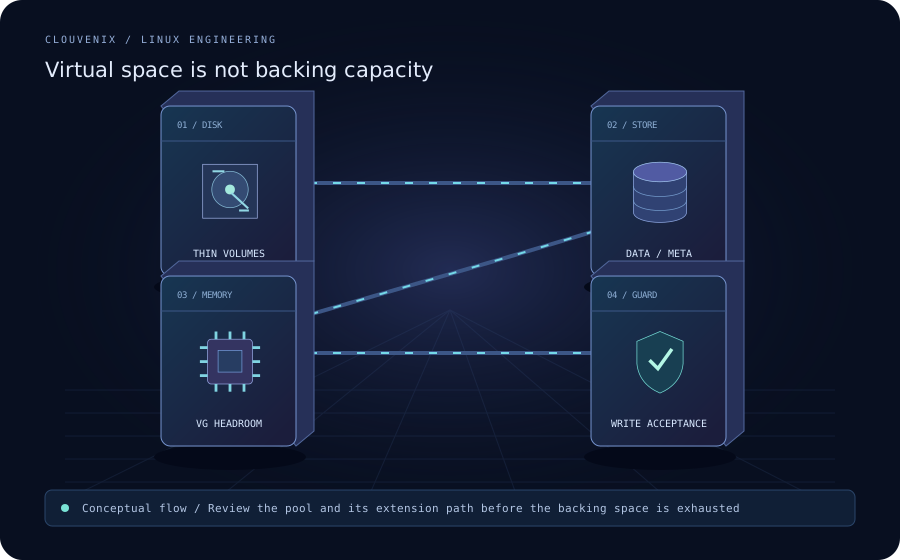 ENGINEERING JOURNAL ↗
LVM thin pools: monitor data, metadata and extension capacity
Understand why a thin volume can look spacious while its backing pool is constrained, then review data, metadata, monitoring and volume-group headroom together.
Read field note ↗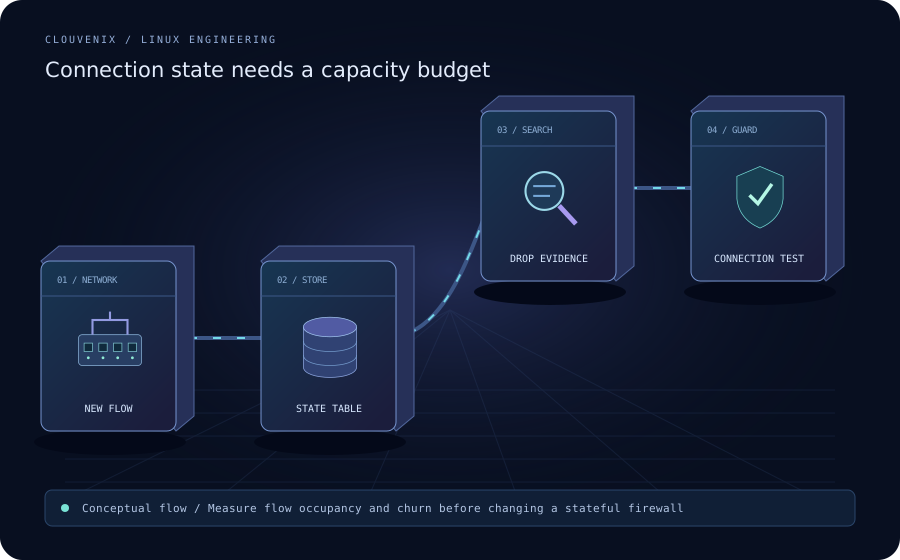 ENGINEERING JOURNAL ↗
Linux conntrack pressure: investigate new connections that fail
Trace new-connection failures through connection-tracking occupancy, drop counters and traffic shape, then validate a capacity correction without flushing live state.
Read field note ↗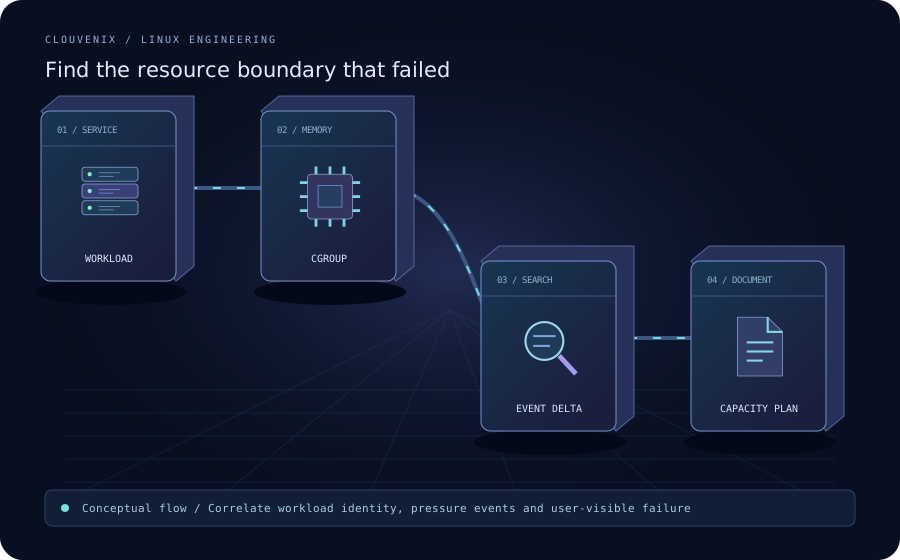 ENGINEERING JOURNAL ↗
Linux OOM investigations: connect cgroup events to the failed workload
Separate host memory pressure, cgroup limits and application allocation failures, then use memory-event evidence to size and verify a targeted recovery.
Read field note ↗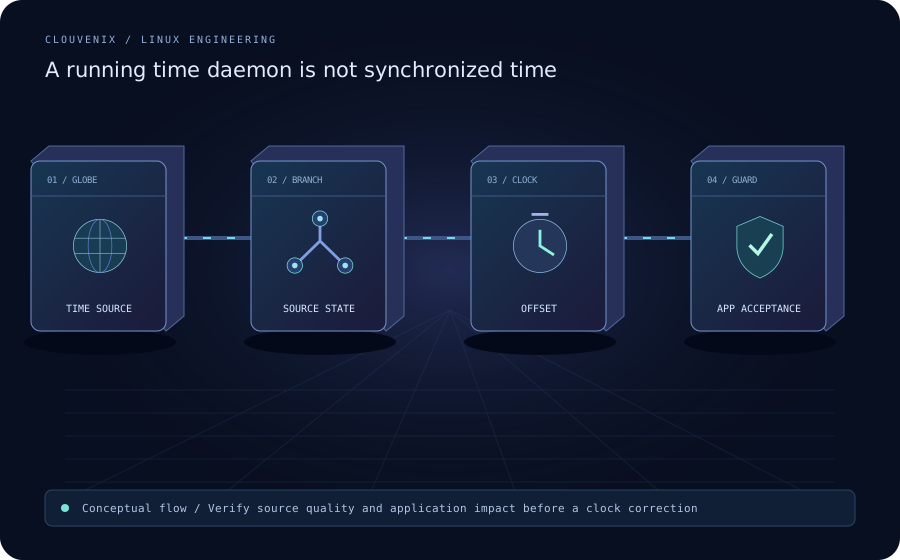 ENGINEERING JOURNAL ↗
chrony troubleshooting: verify synchronization before stepping time
Investigate Linux clock drift using chrony source selection and tracking evidence, then plan correction around application behavior and verify stable synchronization.
Read field note ↗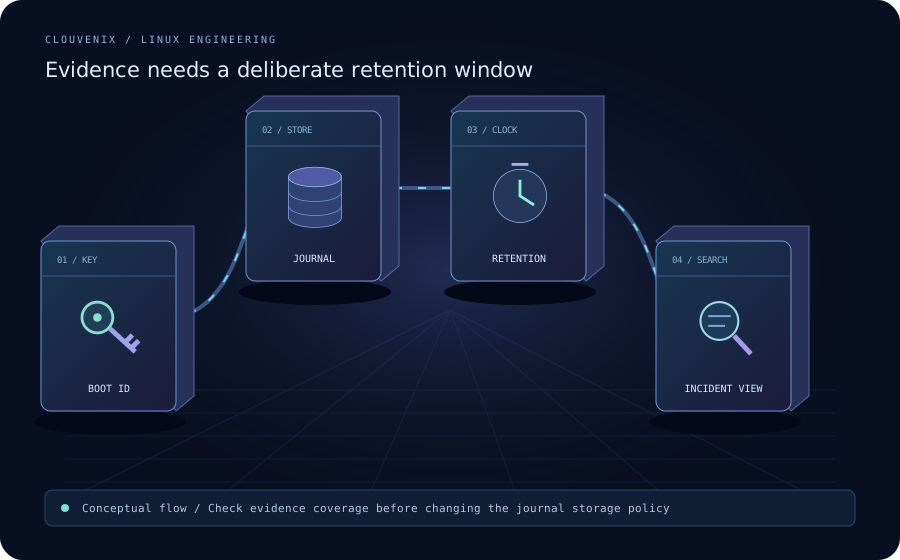 ENGINEERING JOURNAL ↗
Linux journal retention: preserve the previous boot before cleanup
Design systemd journal retention around incident evidence, inspect boot coverage and capacity limits, and verify persistence without treating log deletion as incident recovery.
Read field note ↗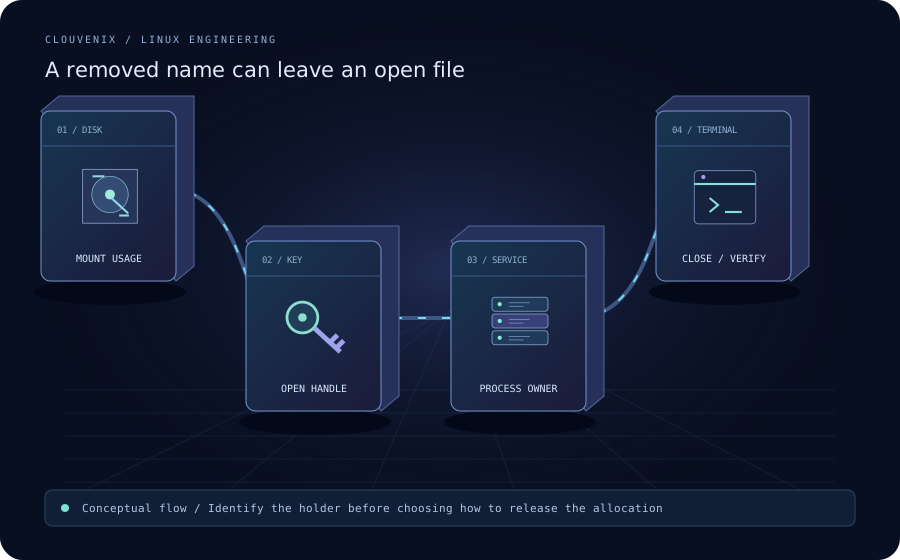 ENGINEERING JOURNAL ↗
Deleted Linux files still use disk: investigate open handles safely
Explain a df versus du gap using filesystem scope and unlinked open files, identify the owning process and recover space through an application-aware close or restart.
Read field note ↗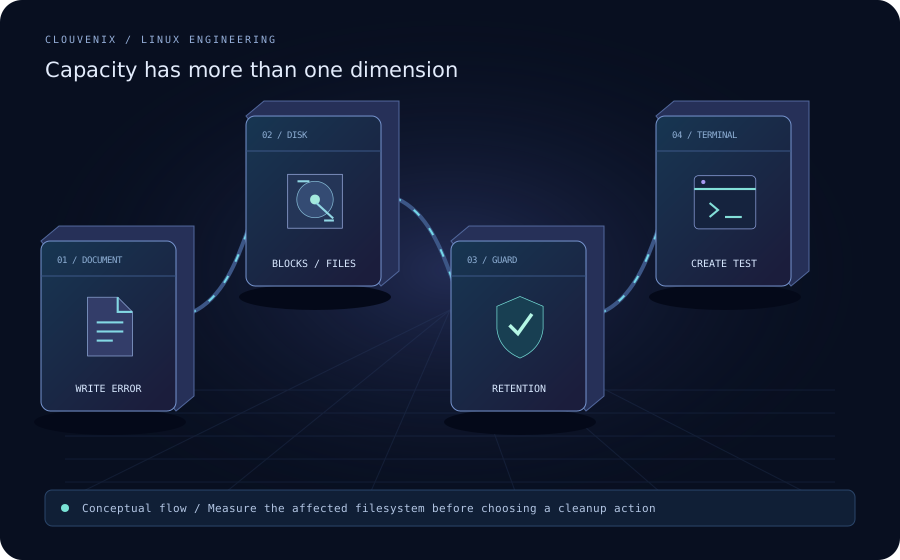 ENGINEERING JOURNAL ↗
Linux inode exhaustion: why free gigabytes may not permit a new file
Separate inode pressure from block capacity, identify high-file-count directories safely and verify that cleanup restores the application without deleting required data.
Read field note ↗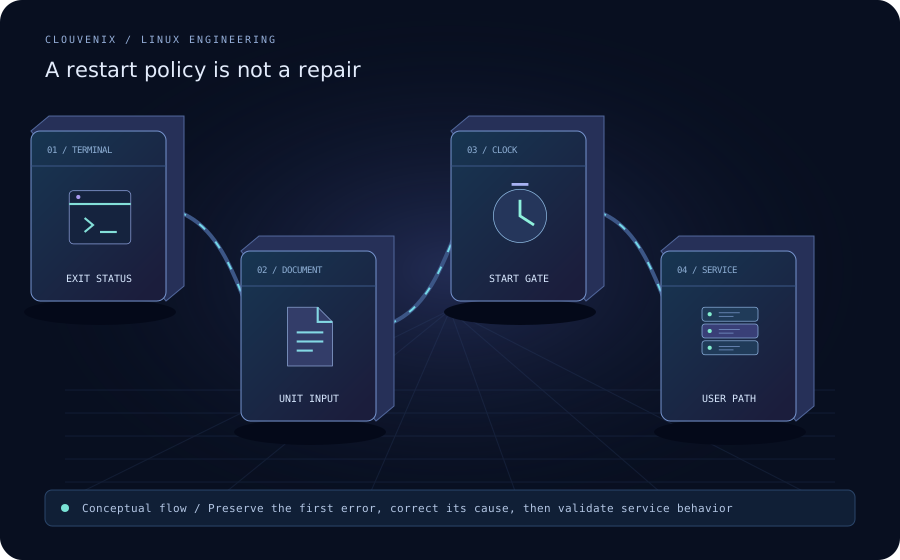 ENGINEERING JOURNAL ↗
systemd restart loops: find the first failure before resetting limits
Investigate Linux service restart loops through exit status, effective unit configuration and start limits, then verify useful recovery beyond an active process.
Read field note ↗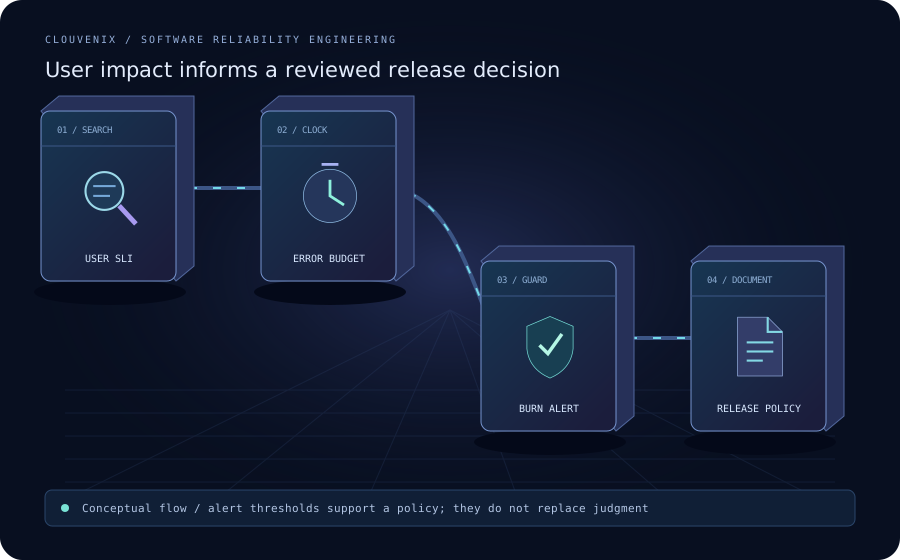 ENGINEERING JOURNAL ↗
Software SLOs: connect error-budget burn to release decisions
Define user-centered SLIs and error-budget alerts, then connect observed burn to an explicit release and incident policy without confusing an internal SLO with an SLA.
Read field note ↗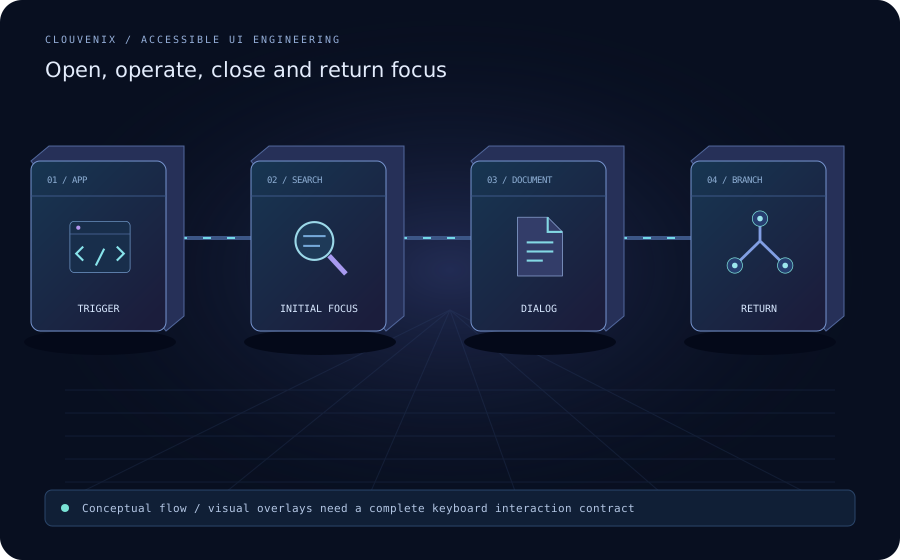 ENGINEERING JOURNAL ↗
Accessible dialogs: manage focus through the full lifecycle
Build modal dialogs with deliberate initial focus, keyboard containment, close behavior and focus restoration, then test the real workflow with assistive technology.
Read field note ↗