
Ideas for
your next move.
Practical thinking for teams building software, securing systems and operating modern infrastructure. Explore our engineering field notes.
500 insights · Page 14 of 42
 ENGINEERING JOURNAL ↗
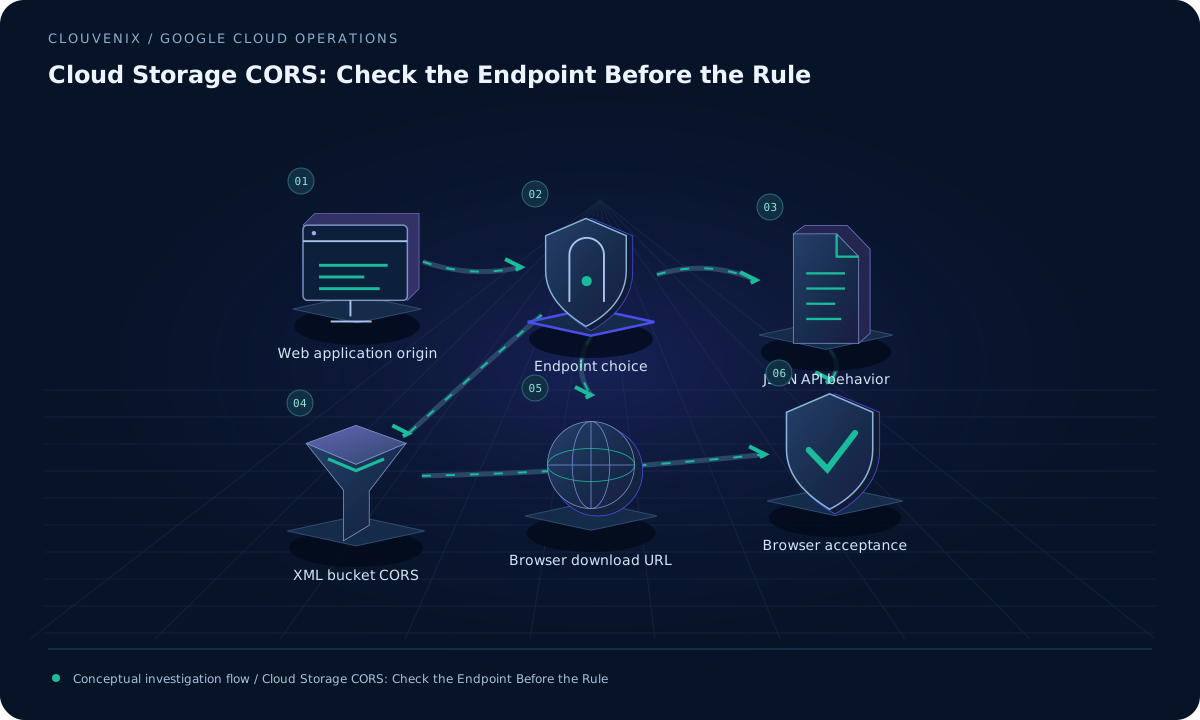
Cloud Storage CORS: Check the Endpoint Before the Rule
Fix Cloud Storage browser access by identifying JSON, XML, or browser-download endpoints, reproducing preflight headers, and verifying the intended origin.
Read field note ↗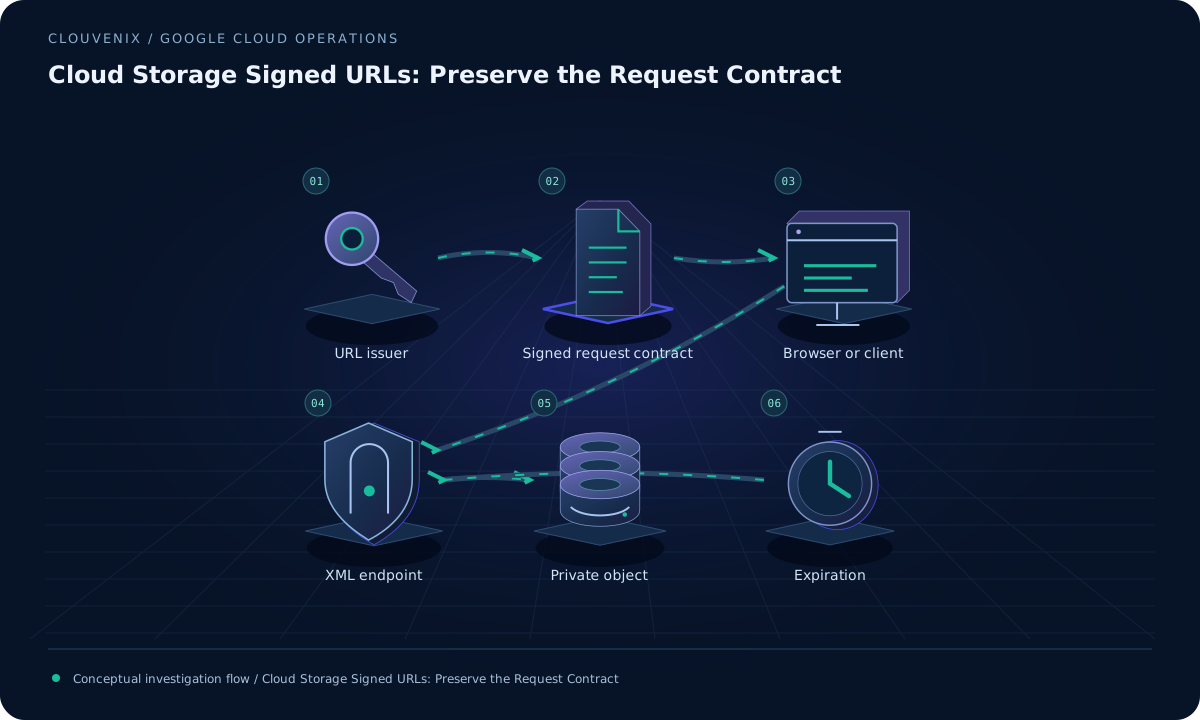 ENGINEERING JOURNAL ↗
Cloud Storage Signed URLs: Preserve the Request Contract
Troubleshoot Cloud Storage signed URLs by checking the HTTP method, signed headers, expiry, object generation, and the XML endpoint actually requested.
Read field note ↗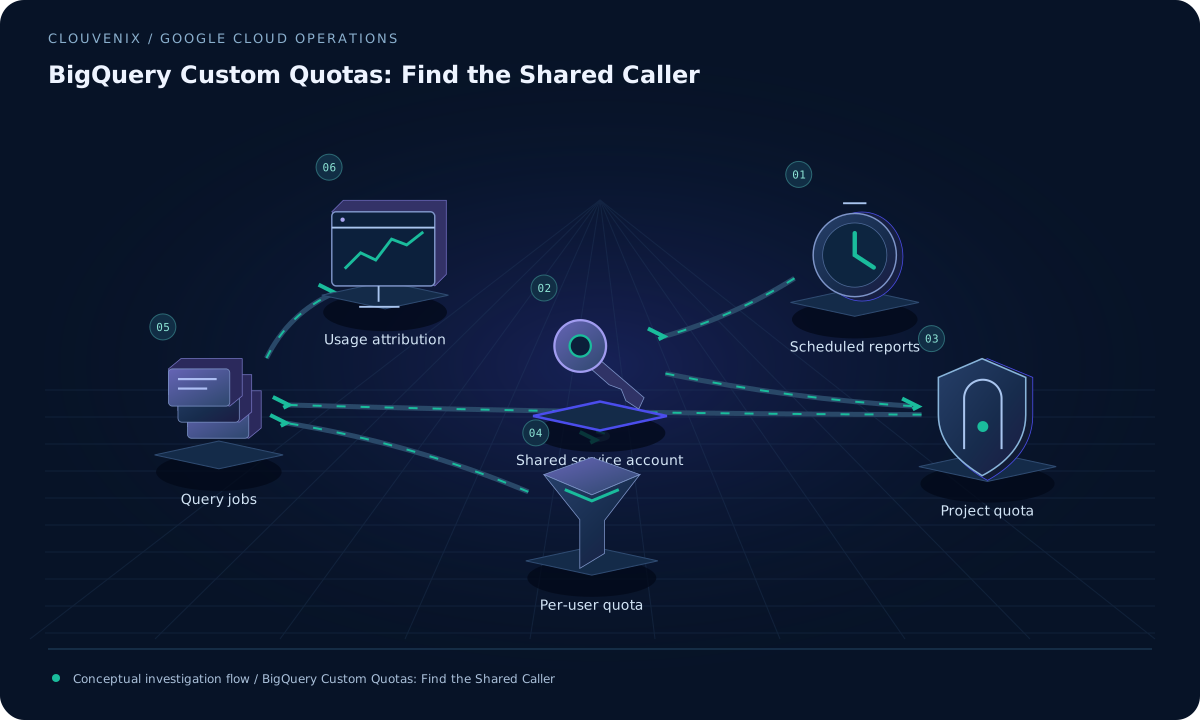 ENGINEERING JOURNAL ↗
BigQuery Custom Quotas: Find the Shared Caller
Diagnose BigQuery daily query-quota failures by identifying the execution project, shared service account, quota reset boundary, and competing workloads.
Read field note ↗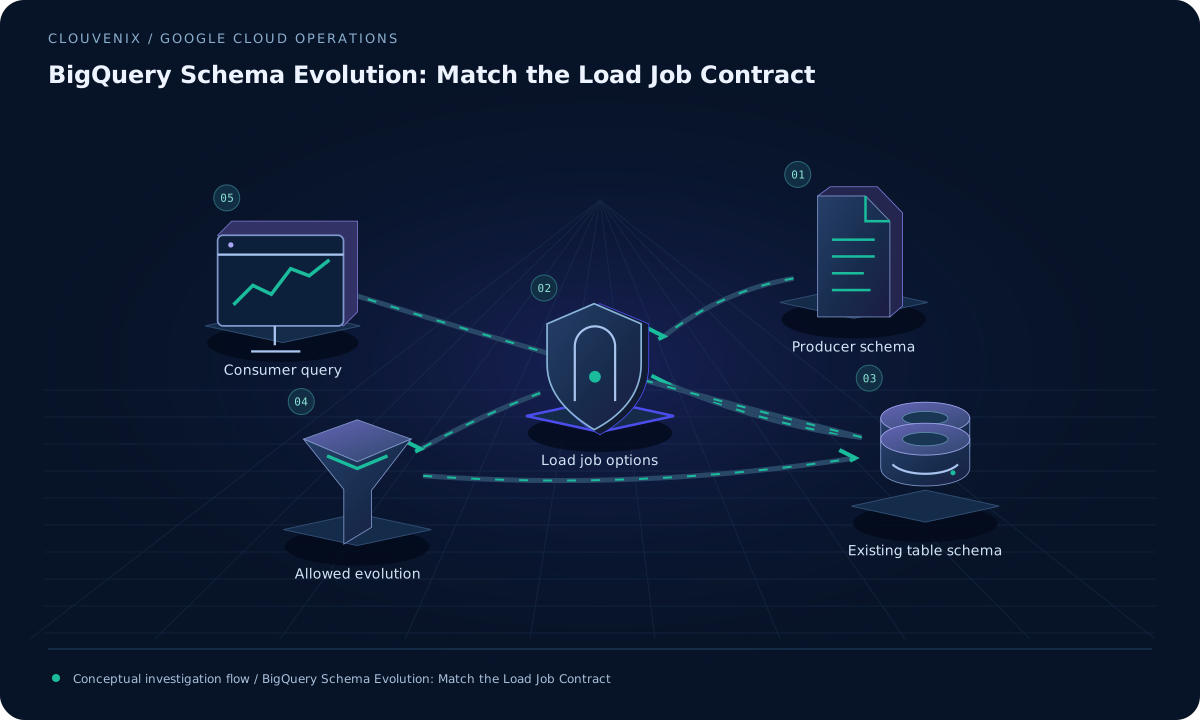 ENGINEERING JOURNAL ↗
BigQuery Schema Evolution: Match the Load Job Contract
Evolve BigQuery tables without accidental rejection by checking nullable additions, required-field relaxation, load-job options, and downstream assumptions.
Read field note ↗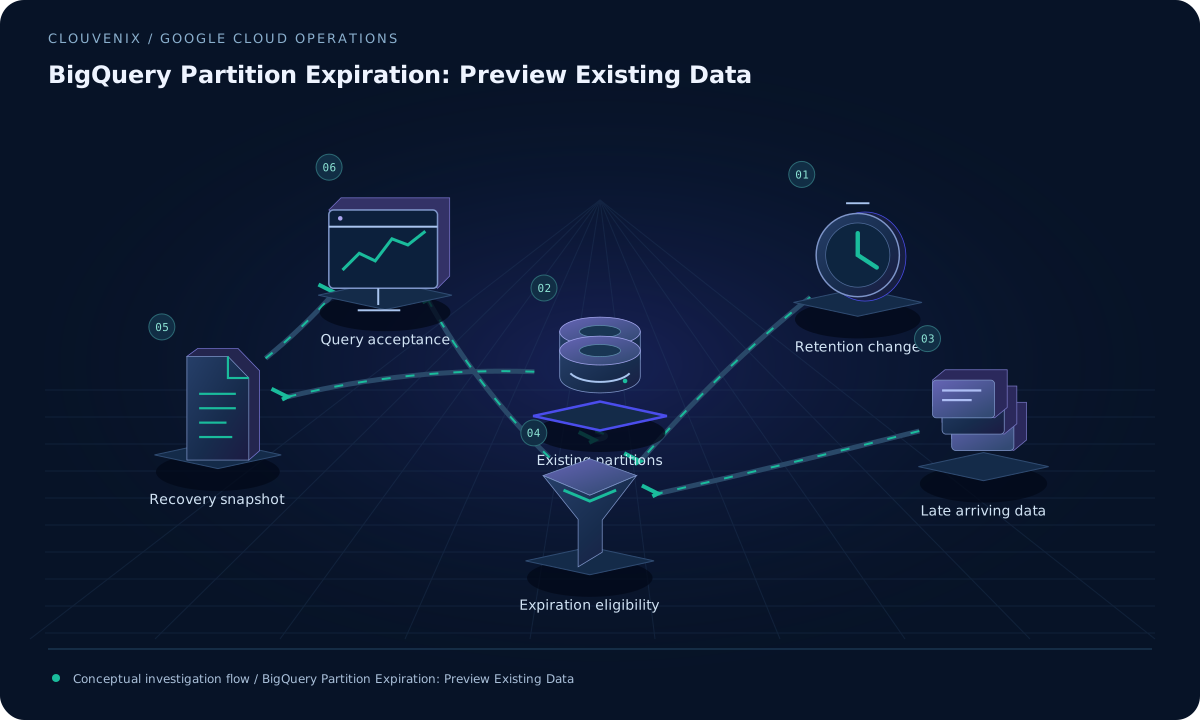 ENGINEERING JOURNAL ↗
BigQuery Partition Expiration: Preview Existing Data
Change BigQuery partition retention safely by checking existing partition ages, table expiration, historical recovery, and late-arriving data behavior.
Read field note ↗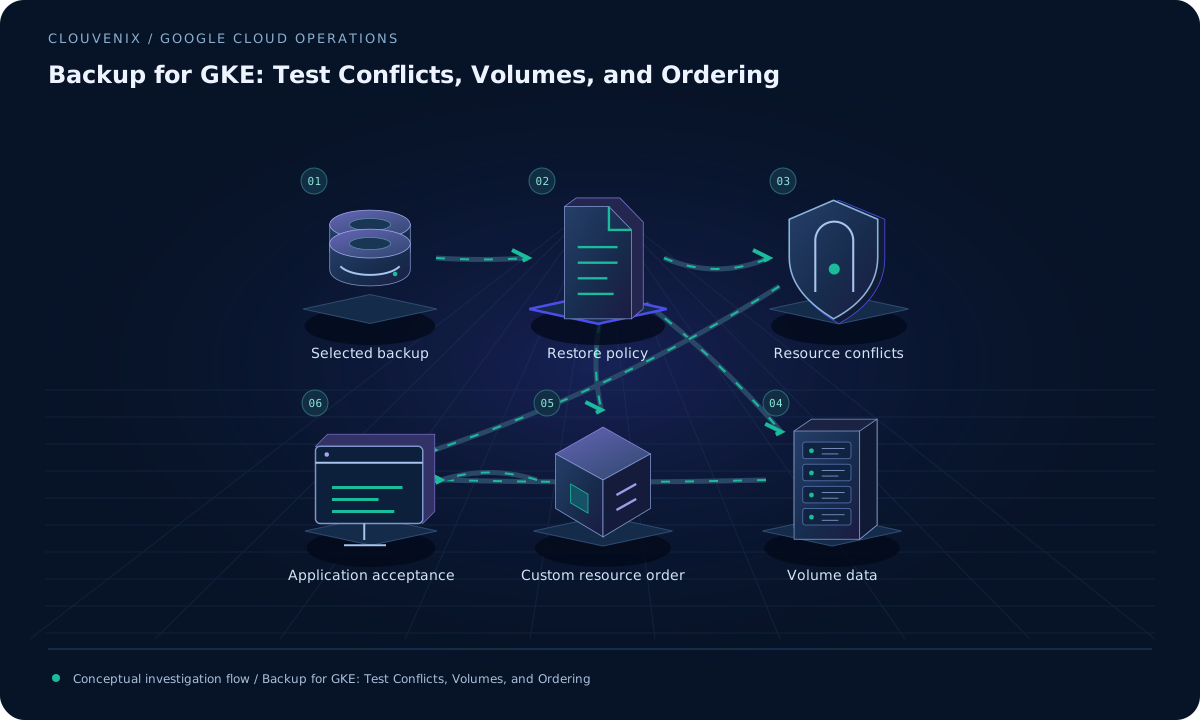 ENGINEERING JOURNAL ↗
Backup for GKE: Test Conflicts, Volumes, and Ordering
Build a GKE restore rehearsal that checks resource conflicts, volume-data policy, custom-resource ordering, and the recovered application result.
Read field note ↗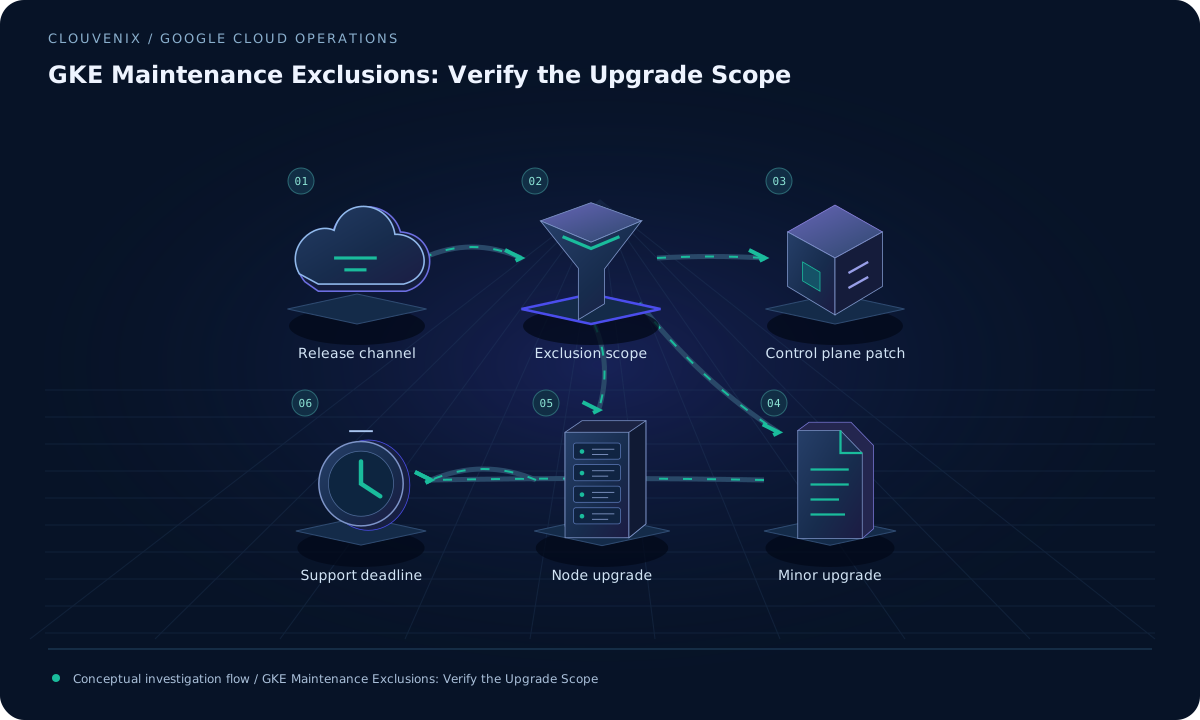 ENGINEERING JOURNAL ↗
GKE Maintenance Exclusions: Verify the Upgrade Scope
Align GKE release channels and maintenance exclusions with the upgrades you intend to postpone, while tracking support deadlines and exceptions.
Read field note ↗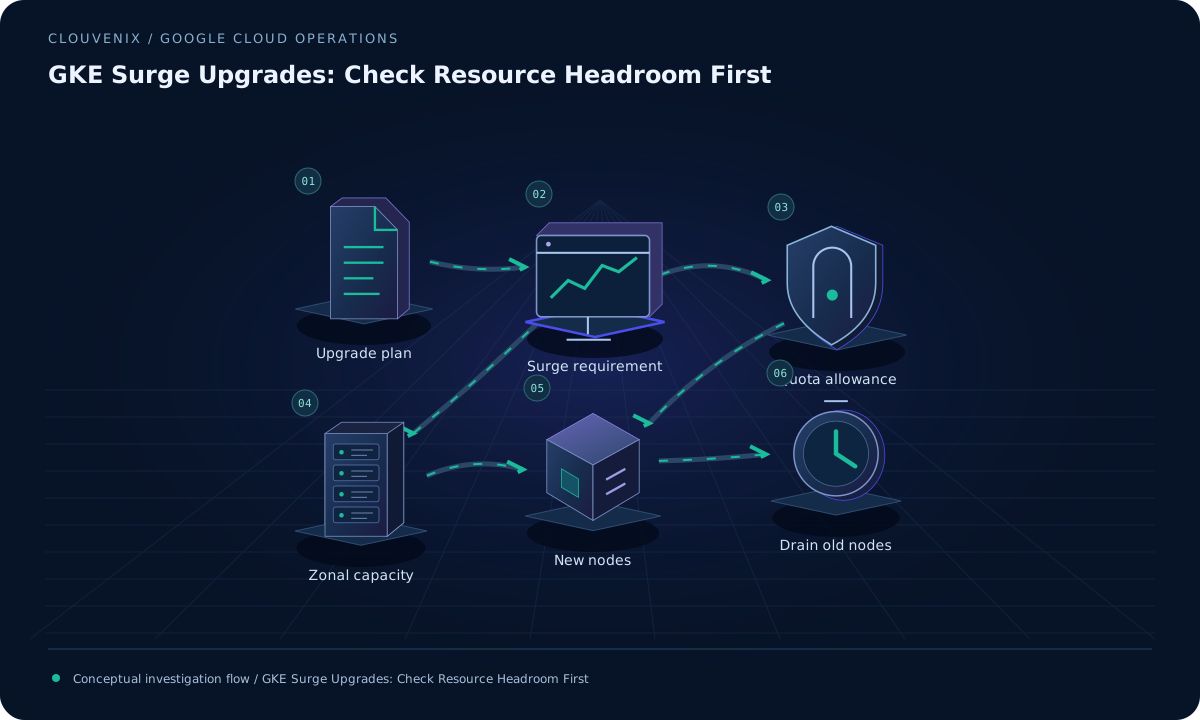 ENGINEERING JOURNAL ↗
GKE Surge Upgrades: Check Resource Headroom First
Prepare GKE node upgrades by matching surge settings to regional quota, zonal capacity, address space, and the availability needed while nodes drain.
Read field note ↗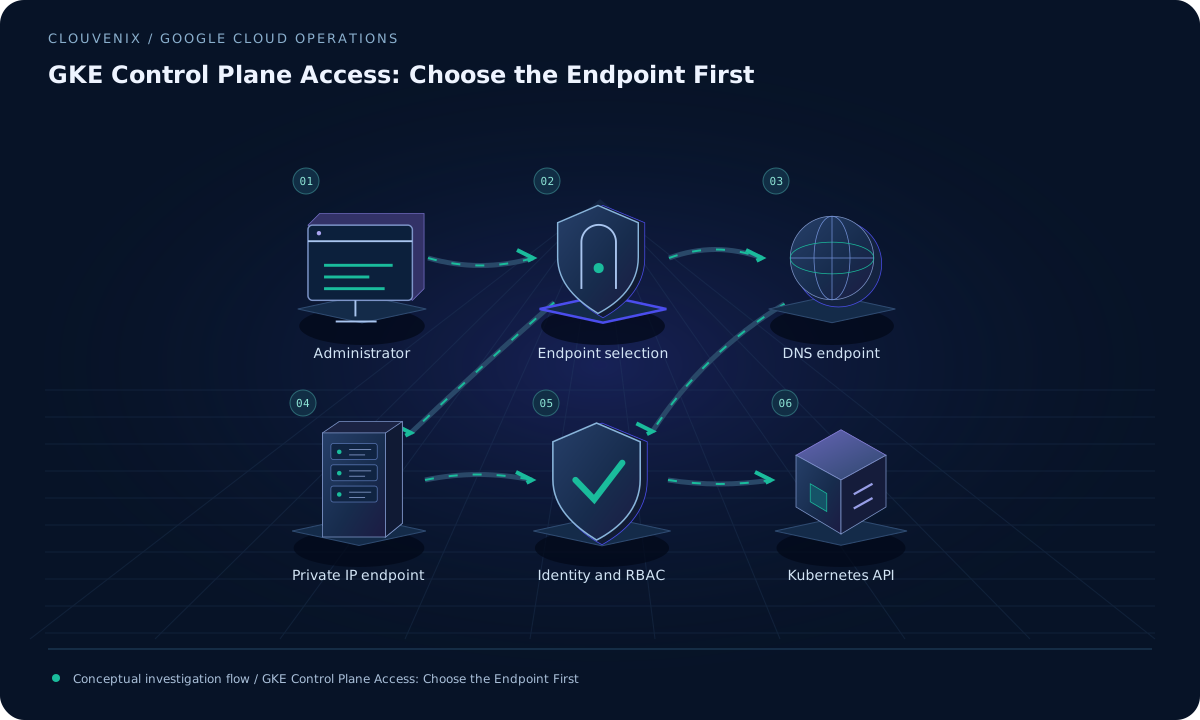 ENGINEERING JOURNAL ↗
GKE Control Plane Access: Choose the Endpoint First
Troubleshoot GKE administration by distinguishing DNS-based access, private IP reachability, authorized networks, and Kubernetes authorization.
Read field note ↗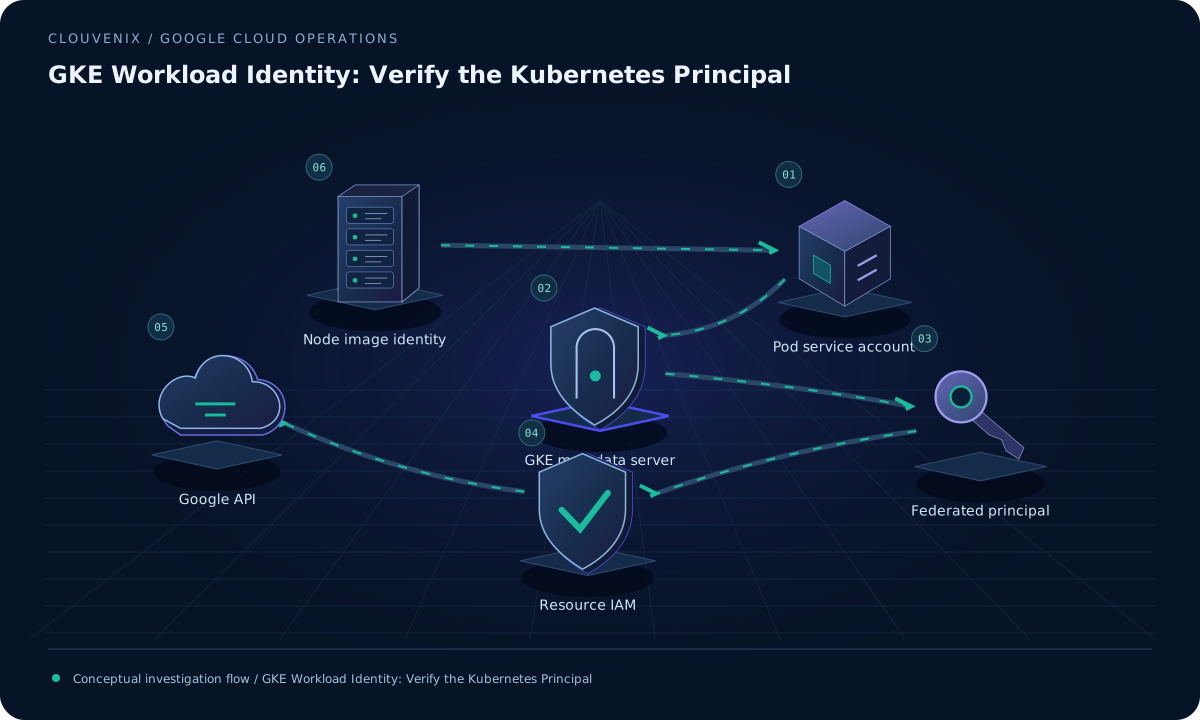 ENGINEERING JOURNAL ↗
GKE Workload Identity: Verify the Kubernetes Principal
Configure GKE workload access using the Pod service account and metadata path, then distinguish application API permissions from node image-pull permissions.
Read field note ↗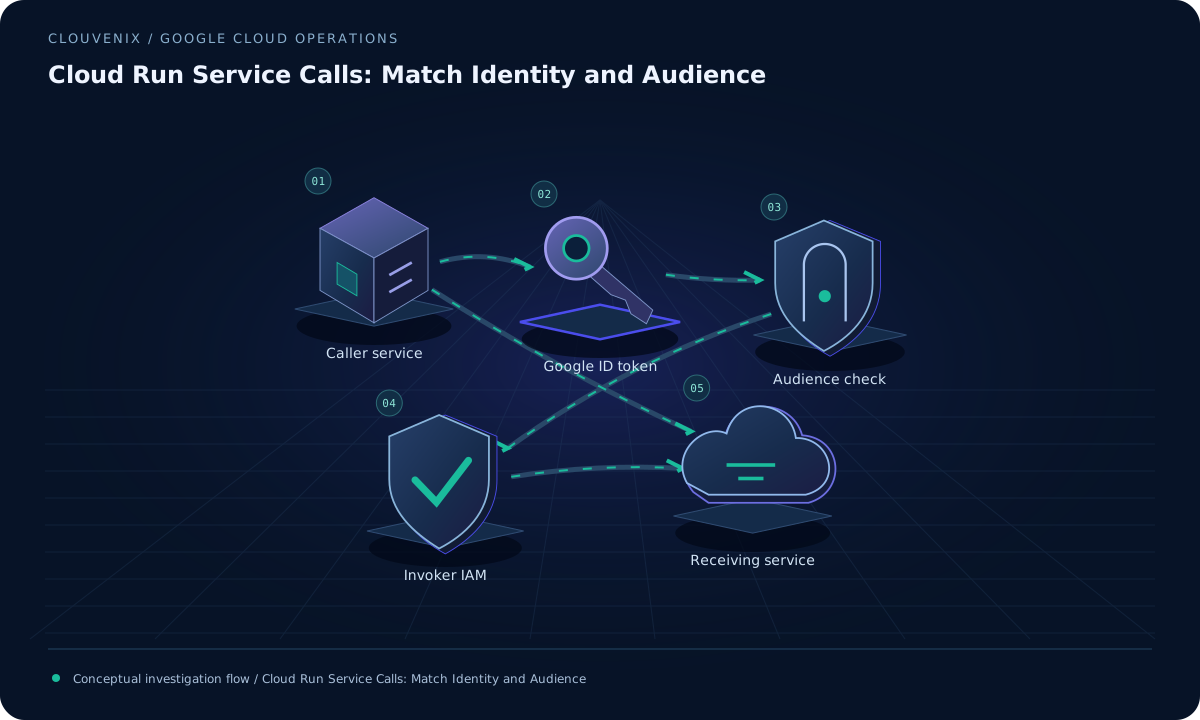 ENGINEERING JOURNAL ↗
Cloud Run Service Calls: Match Identity and Audience
Diagnose private Cloud Run service calls by checking the caller service identity, invoker permission, ID-token audience, and the actual destination URL.
Read field note ↗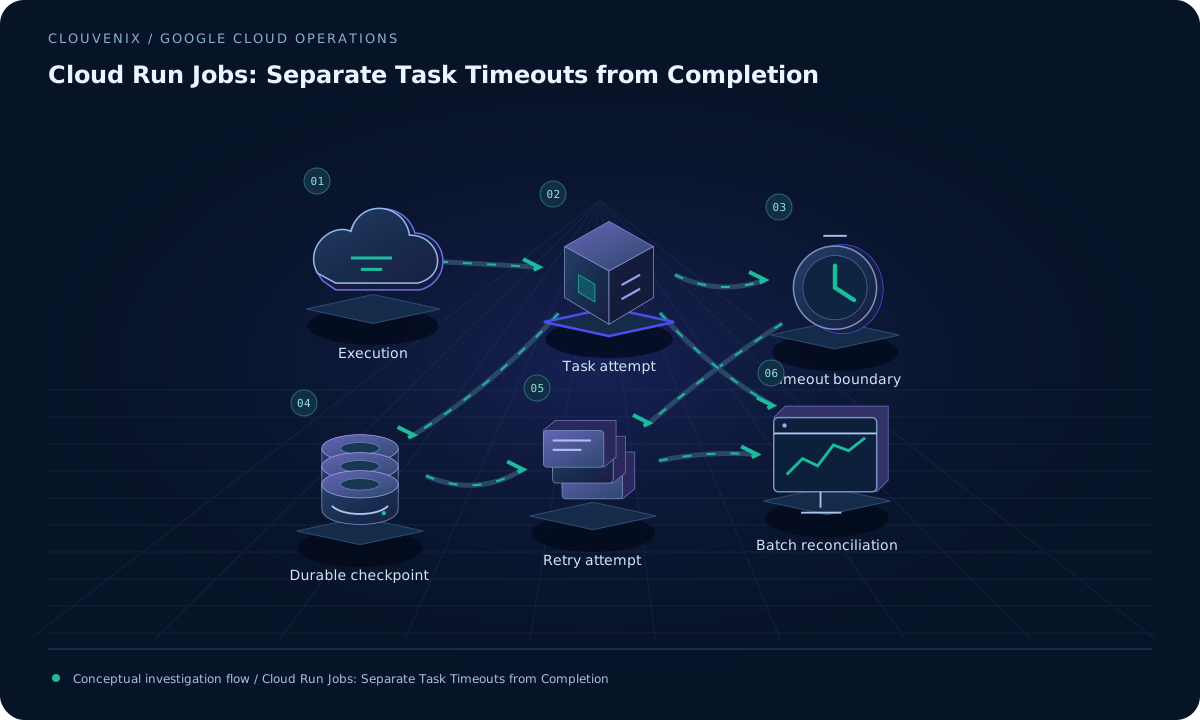 ENGINEERING JOURNAL ↗
Cloud Run Jobs: Separate Task Timeouts from Completion
Design Cloud Run job timeouts around individual task attempts, bounded retries, durable checkpoints, and evidence that the full batch actually completed.
Read field note ↗