
Ideas for
your next move.
Practical thinking for teams building software, securing systems and operating modern infrastructure. Explore our engineering field notes.
500 insights · Page 19 of 42
 ENGINEERING JOURNAL ↗
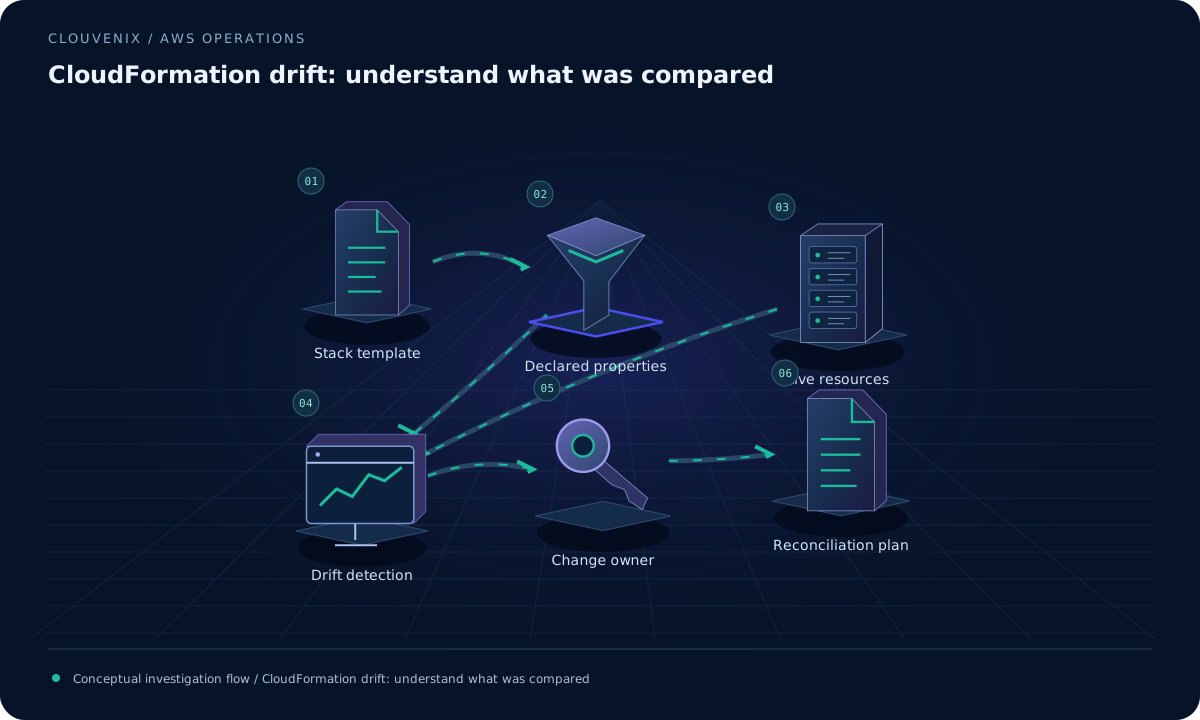
CloudFormation drift: understand what was compared
Interpret CloudFormation drift results using supported resource properties, explicit template values, nested-stack scope and the operational intent of manual changes.
Read field note ↗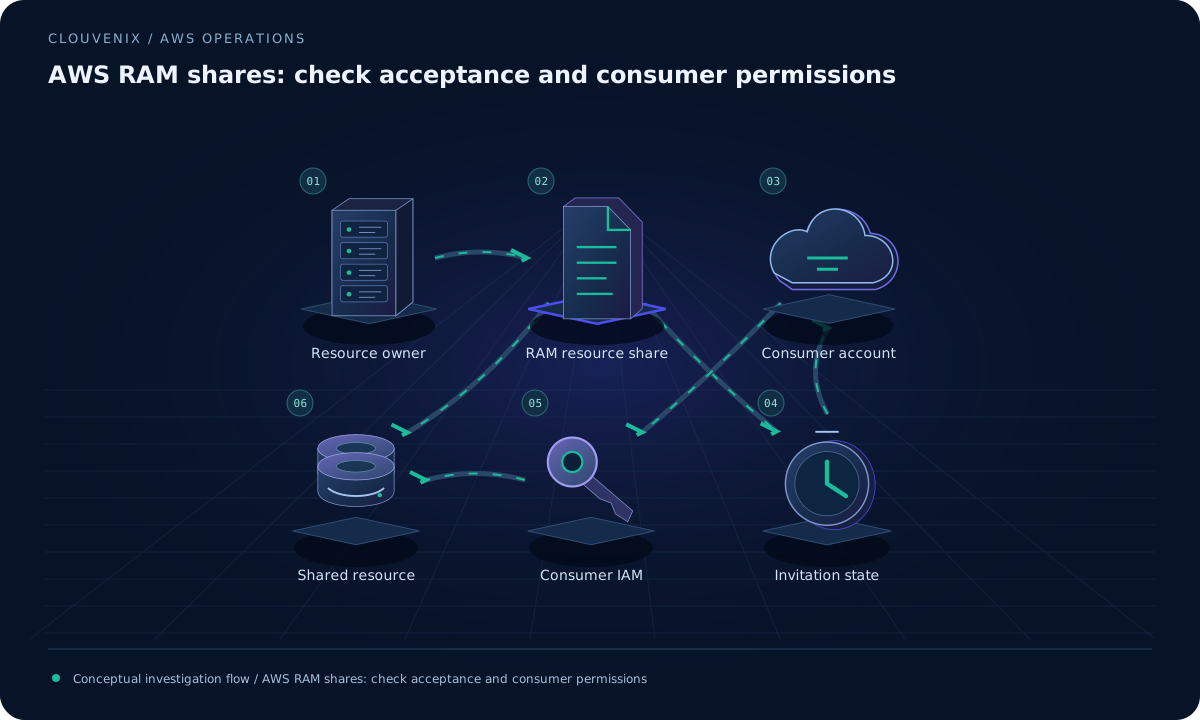 ENGINEERING JOURNAL ↗
AWS RAM shares: check acceptance and consumer permissions
Investigate an invisible or unusable shared AWS resource by checking share scope, invitation state, resource association and consumer identity.
Read field note ↗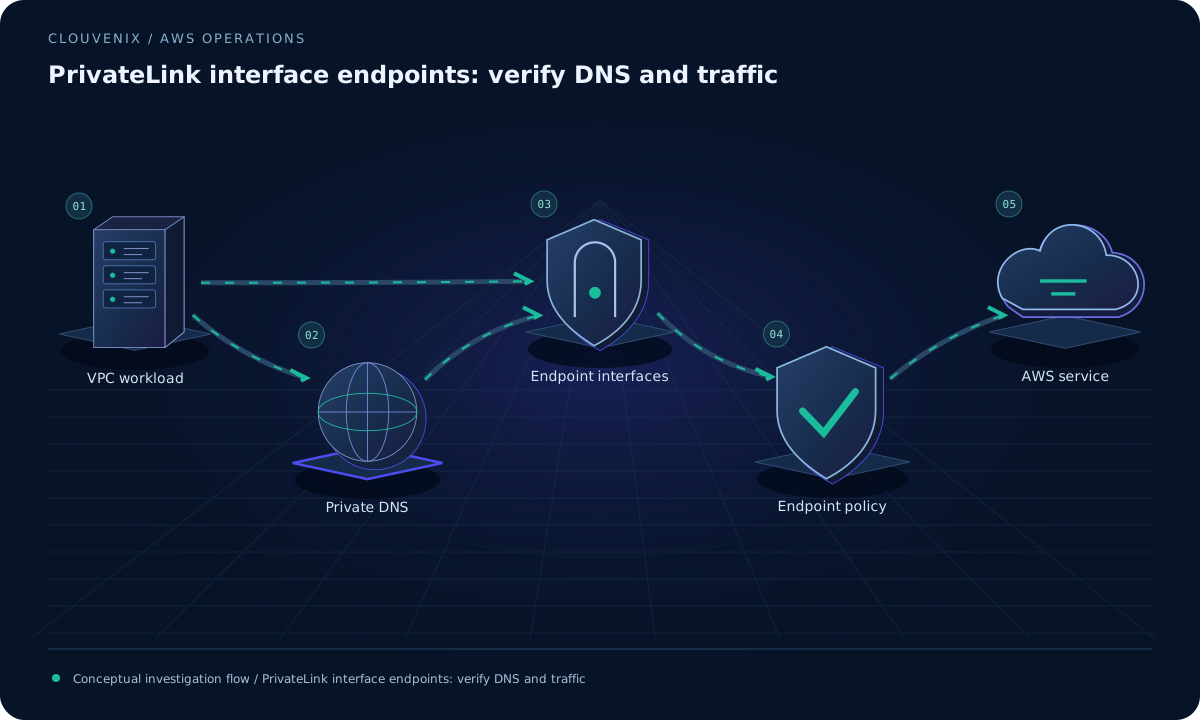 ENGINEERING JOURNAL ↗
PrivateLink interface endpoints: verify DNS and traffic
Trace an AWS service request through private DNS, endpoint network interfaces, security groups and endpoint policy before widening network access.
Read field note ↗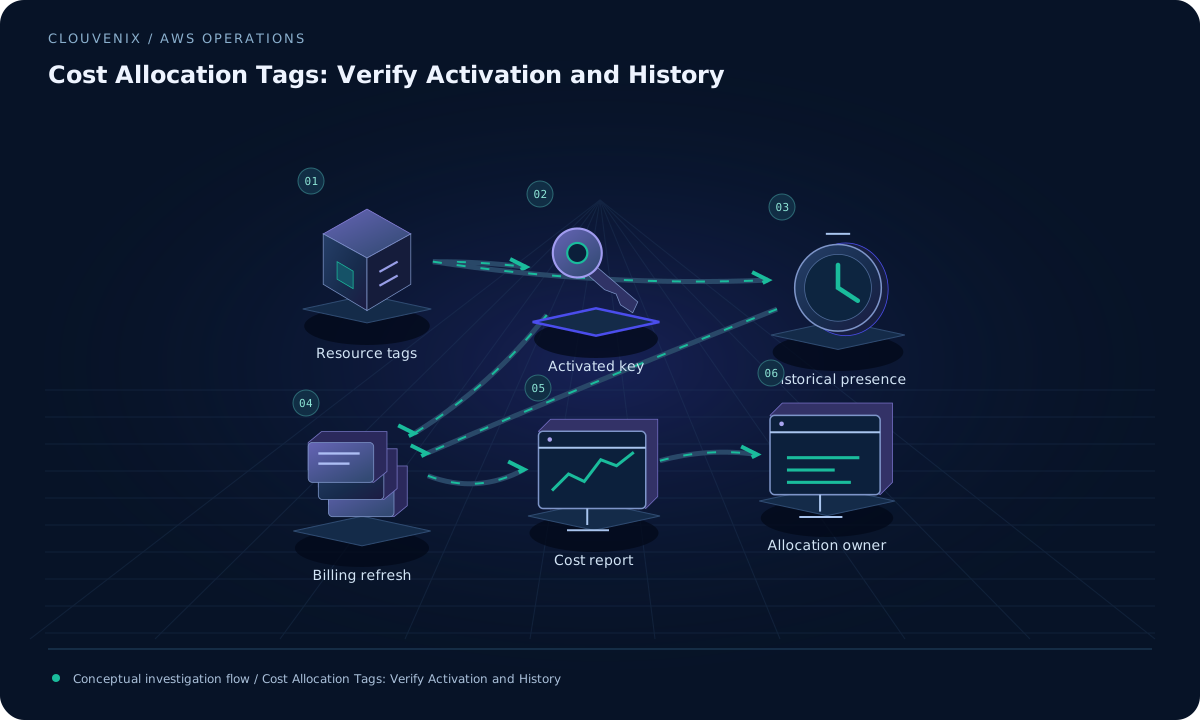 ENGINEERING JOURNAL ↗
Cost Allocation Tags: Verify Activation and History
Turn resource tags into usable AWS cost dimensions by checking key activation, historical tag presence, backfill scope, and refreshed billing data.
Read field note ↗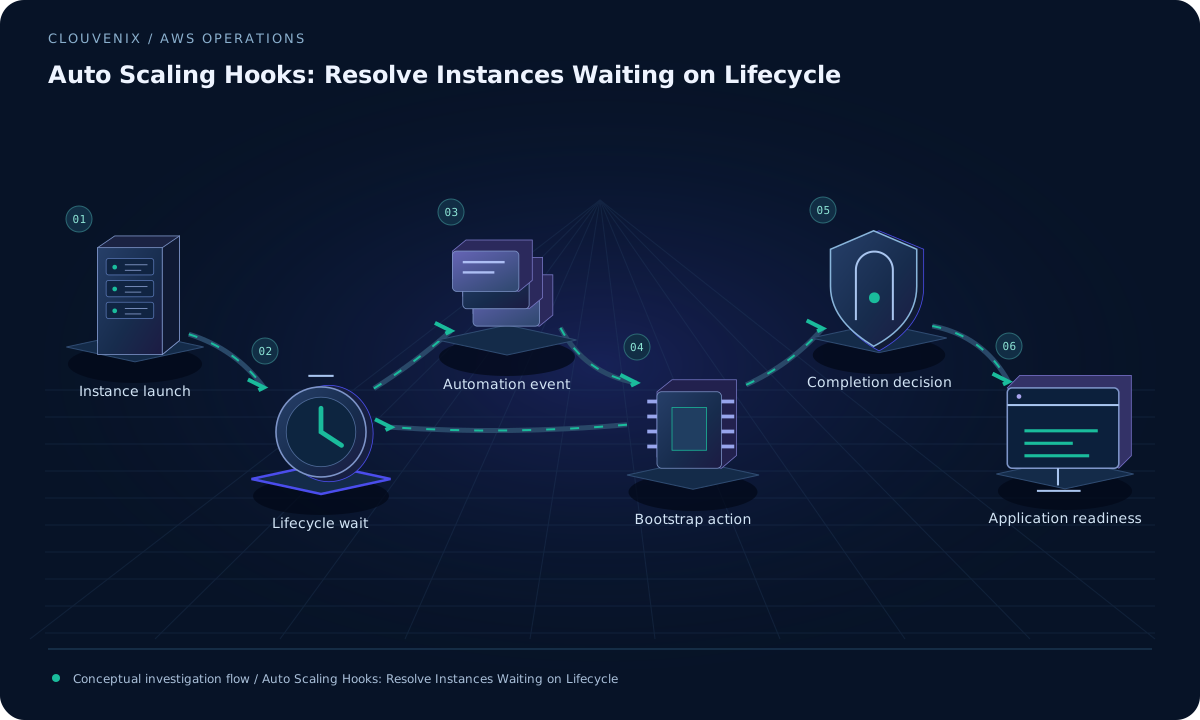 ENGINEERING JOURNAL ↗
Auto Scaling Hooks: Resolve Instances Waiting on Lifecycle
Trace Auto Scaling lifecycle waits through event delivery, hook identity, heartbeat deadlines, completion results, and application readiness evidence.
Read field note ↗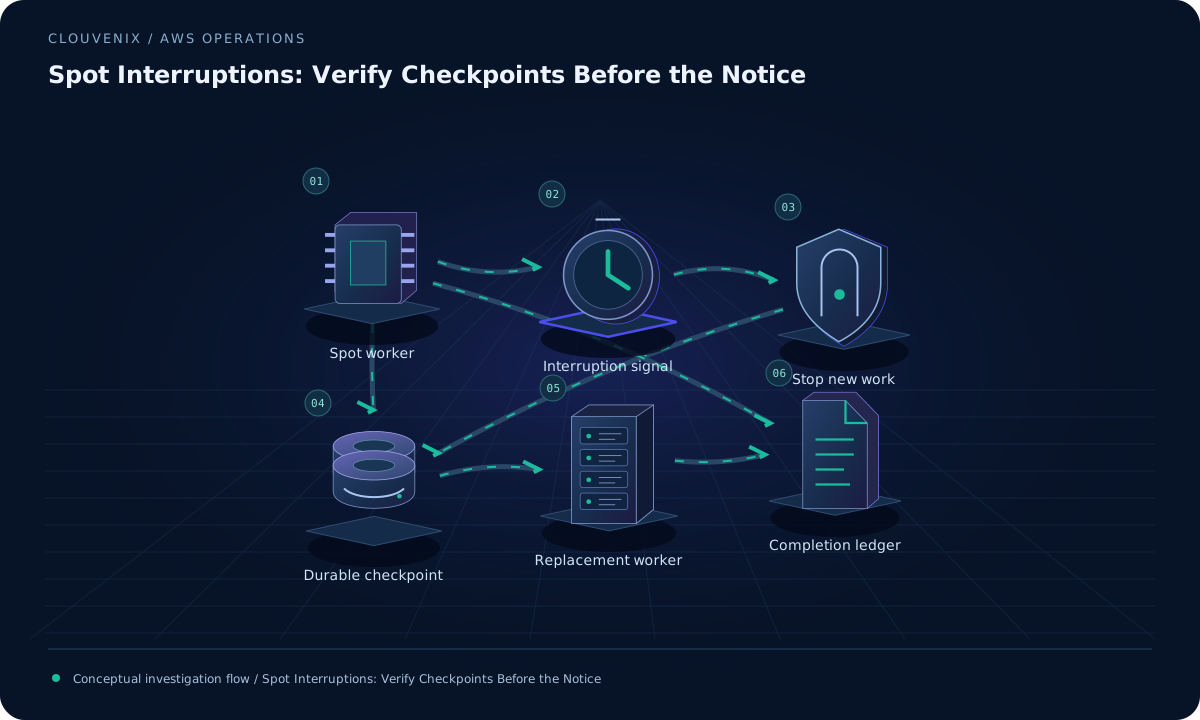 ENGINEERING JOURNAL ↗
Spot Interruptions: Verify Checkpoints Before the Notice
Prepare Spot workloads with durable progress, interruption signals, bounded draining, and recovery tests that do not depend on advance warning.
Read field note ↗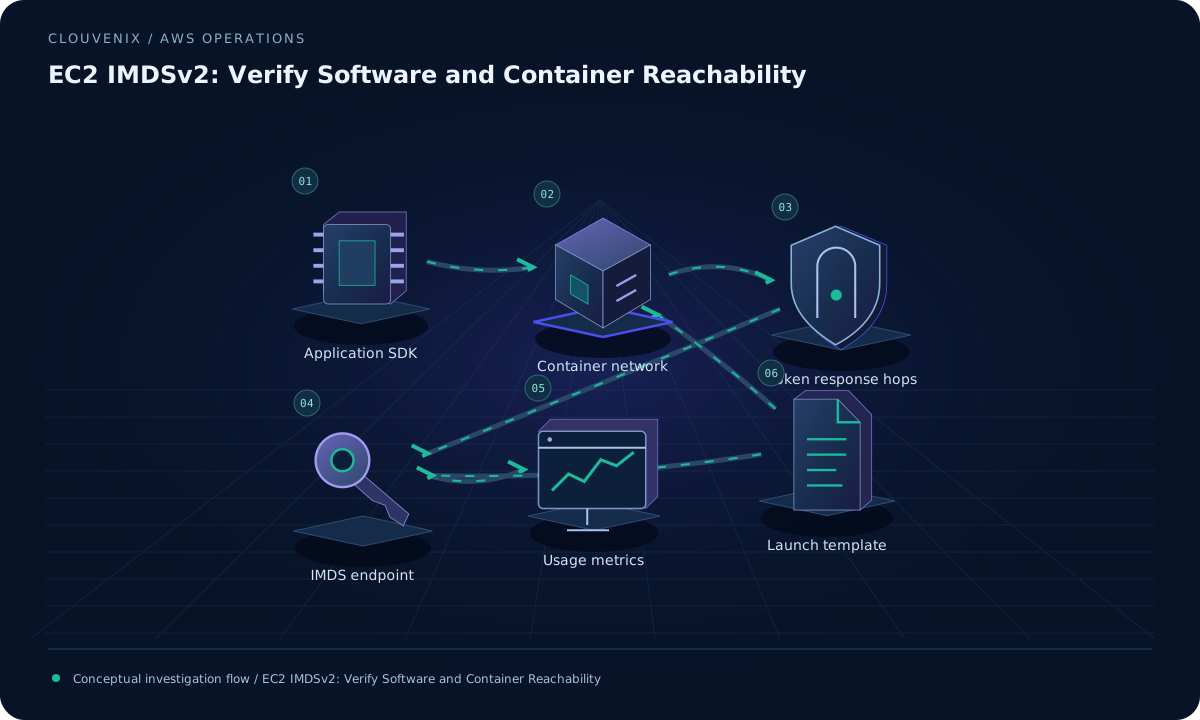 ENGINEERING JOURNAL ↗
EC2 IMDSv2: Verify Software and Container Reachability
Migrate EC2 workloads to IMDSv2 using usage evidence, compatible software, container-path testing, and launch-template checks for replacement instances.
Read field note ↗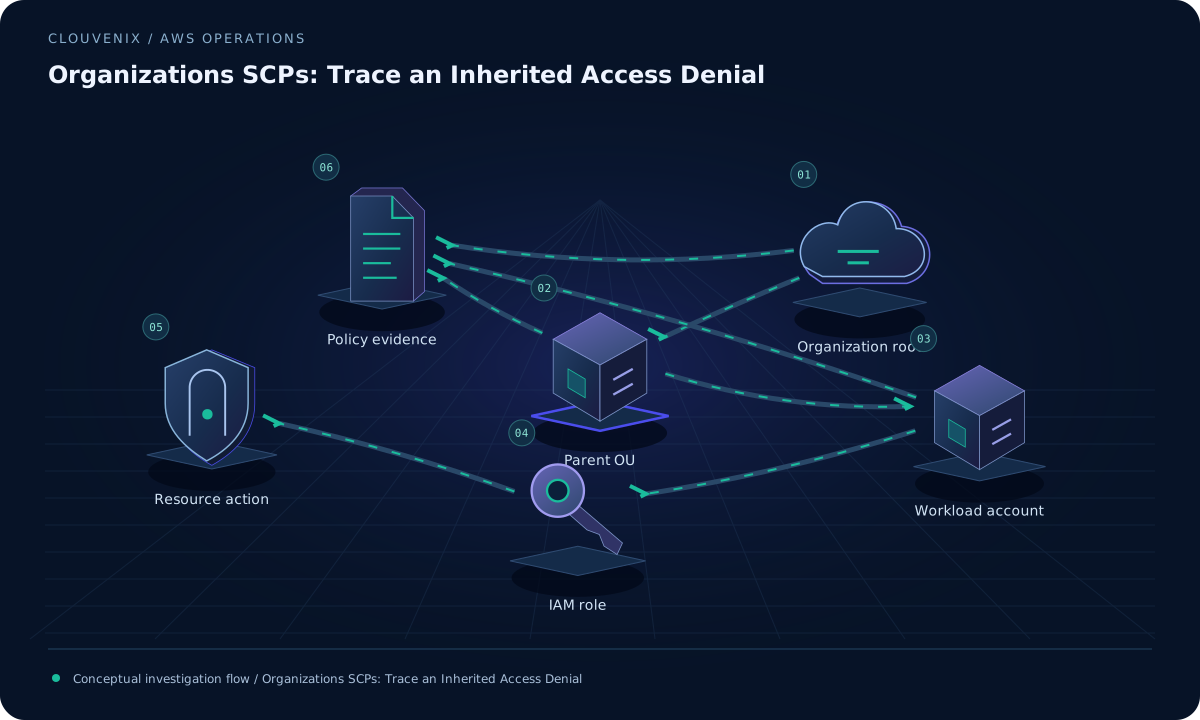 ENGINEERING JOURNAL ↗
Organizations SCPs: Trace an Inherited Access Denial
Investigate an AWS Organizations denial by walking root, OU and account policies, then test a narrow correction without confusing SCP limits with IAM grants.
Read field note ↗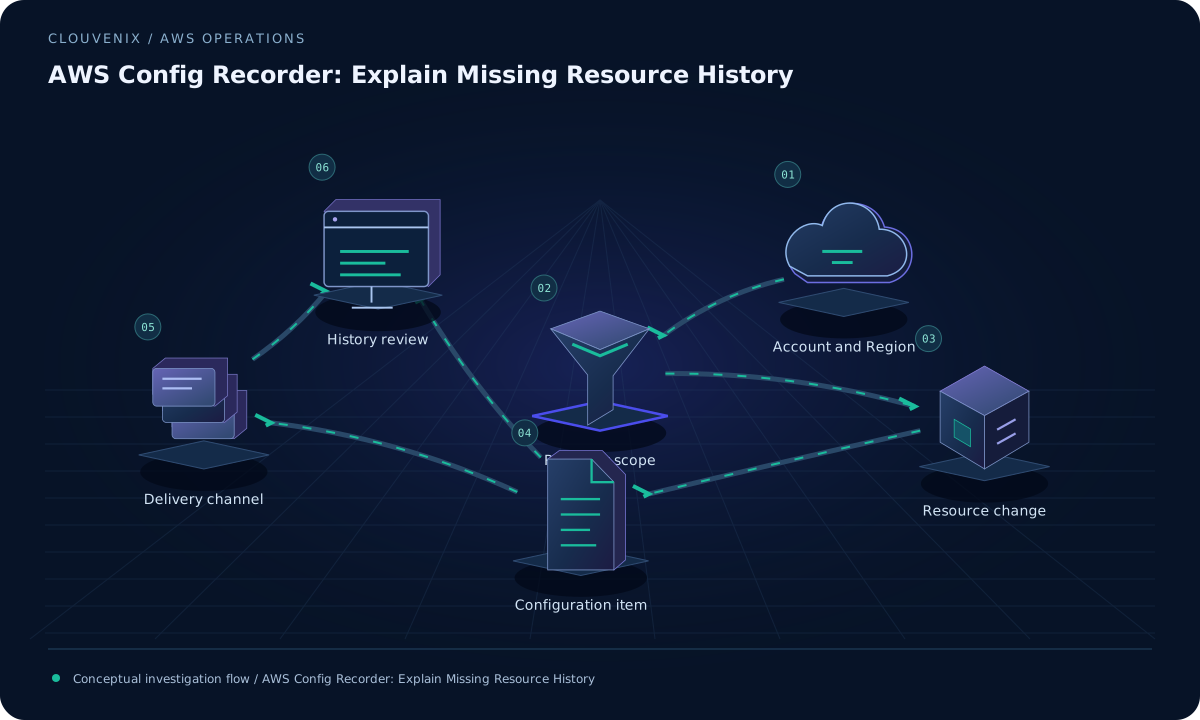 ENGINEERING JOURNAL ↗
AWS Config Recorder: Explain Missing Resource History
Diagnose missing AWS Config history by checking account and Region, recorder status, inclusion or exclusion strategy, global-resource placement, and delivery.
Read field note ↗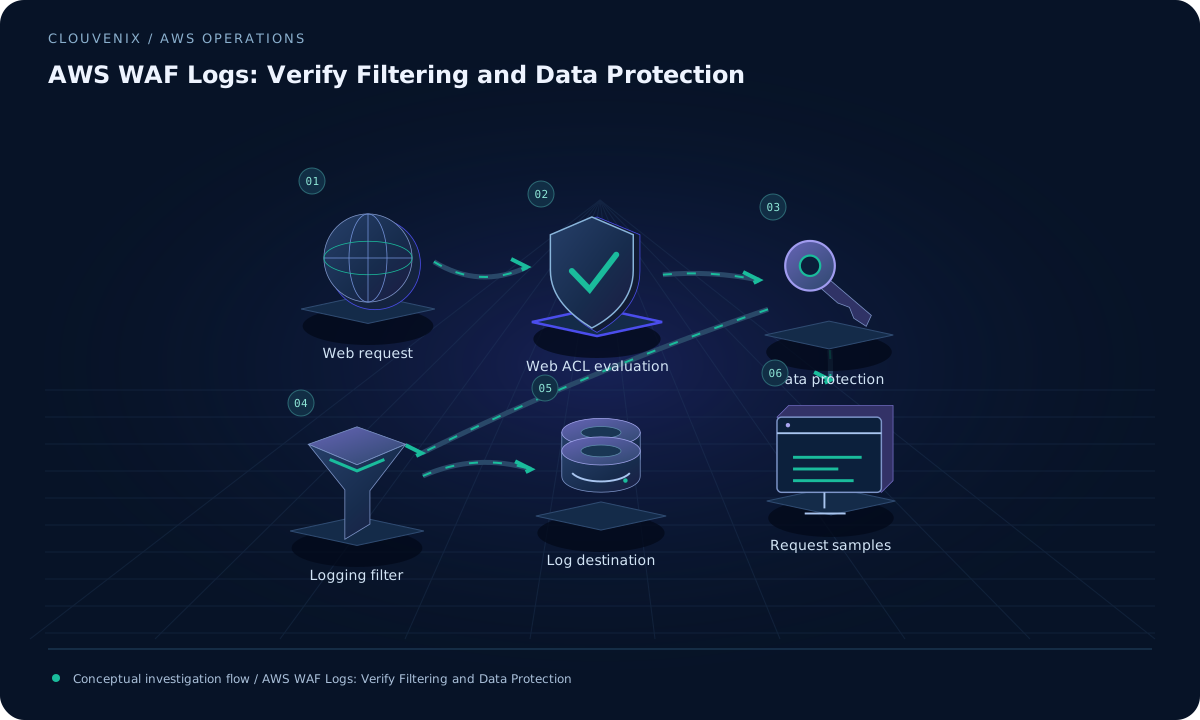 ENGINEERING JOURNAL ↗
AWS WAF Logs: Verify Filtering and Data Protection
Check AWS WAF log completeness and sensitive-field handling by separating logging filters, redaction, sampled requests, and web ACL data protection.
Read field note ↗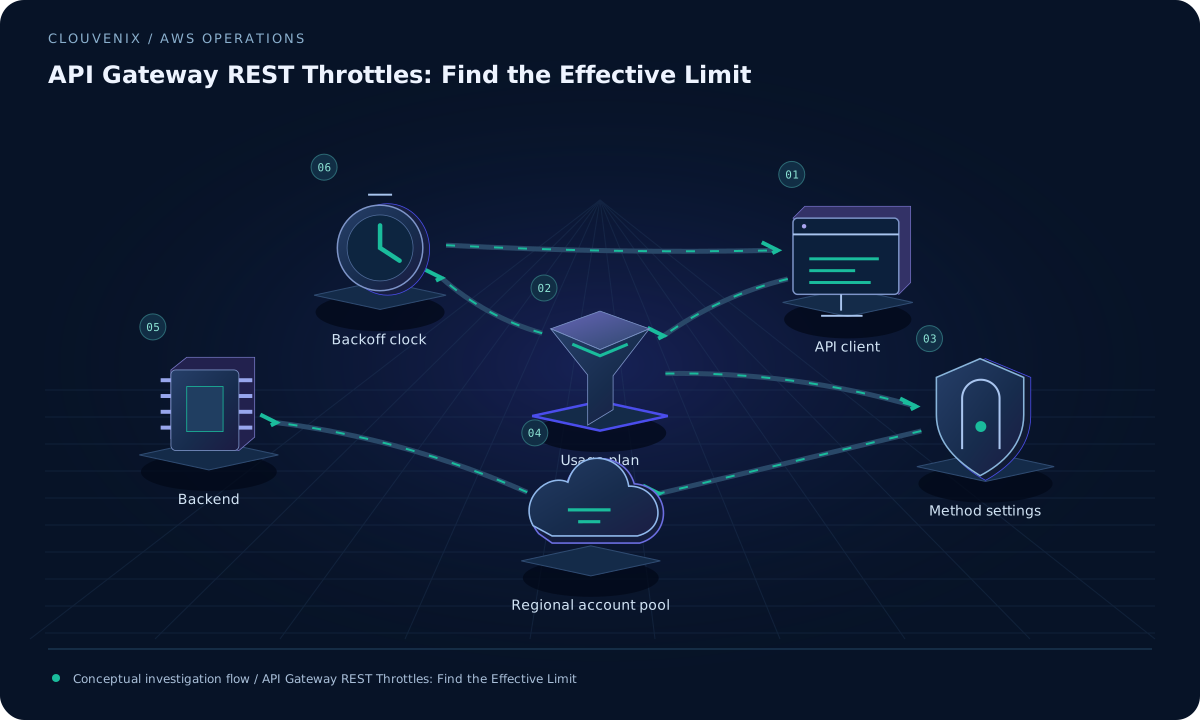 ENGINEERING JOURNAL ↗
API Gateway REST Throttles: Find the Effective Limit
Diagnose REST API 429 responses by comparing usage-plan, method, stage, account and backend evidence, then verify client backoff and capacity.
Read field note ↗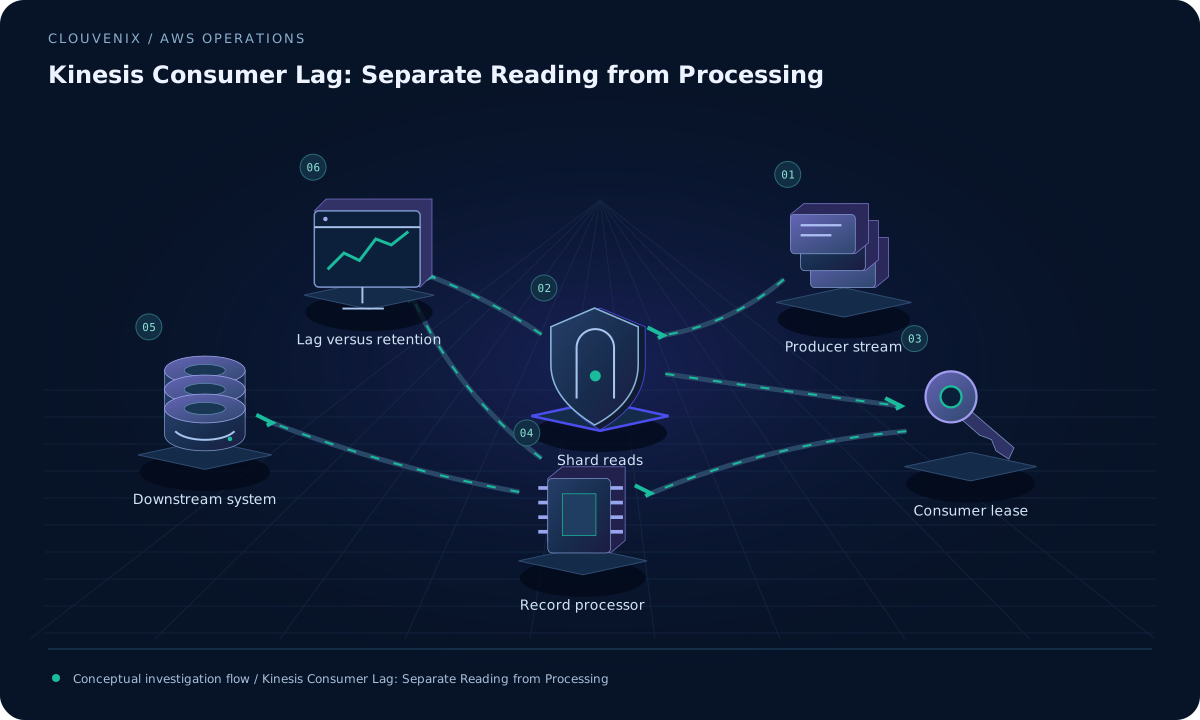 ENGINEERING JOURNAL ↗
Kinesis Consumer Lag: Separate Reading from Processing
Investigate Kinesis backlog by comparing per-consumer lag, shard distribution, shared read limits, processing duration, and the remaining retention window.
Read field note ↗