
Ideas for
your next move.
Practical thinking for teams building software, securing systems and operating modern infrastructure. Explore our engineering field notes.
500 insights · Page 18 of 42
 ENGINEERING JOURNAL ↗
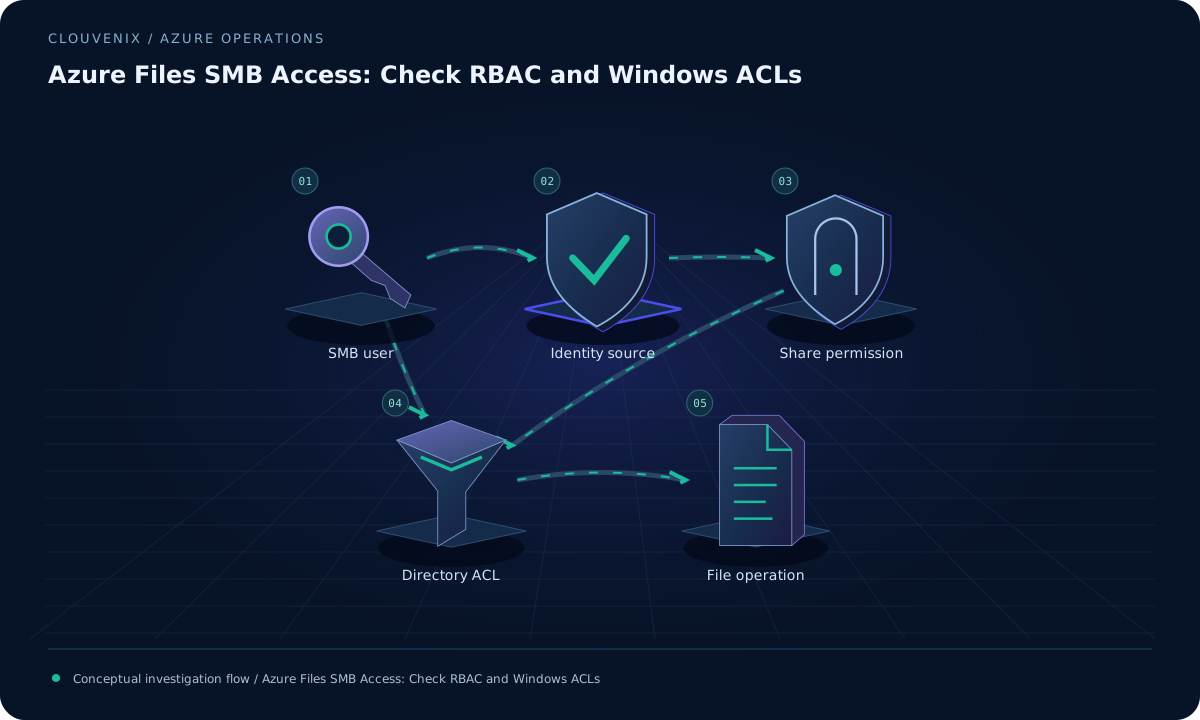
Azure Files SMB Access: Check RBAC and Windows ACLs
Diagnose Azure Files SMB access denied after identity authentication by checking the share-level Azure role, the actual signed-in identity and Windows directory permissions.
Read field note ↗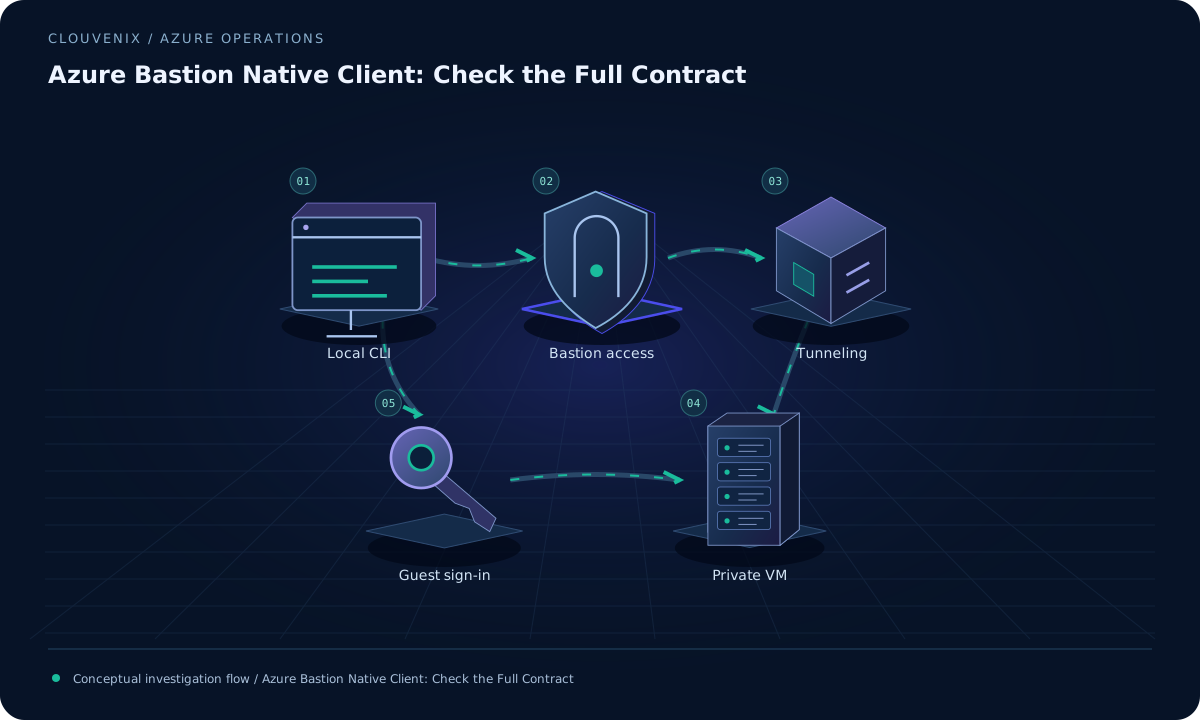 ENGINEERING JOURNAL ↗
Azure Bastion Native Client: Check the Full Contract
Resolve Azure Bastion native client failures by checking the supported SKU, tunneling feature, local CLI environment, Azure permissions and the target VM sign-in method.
Read field note ↗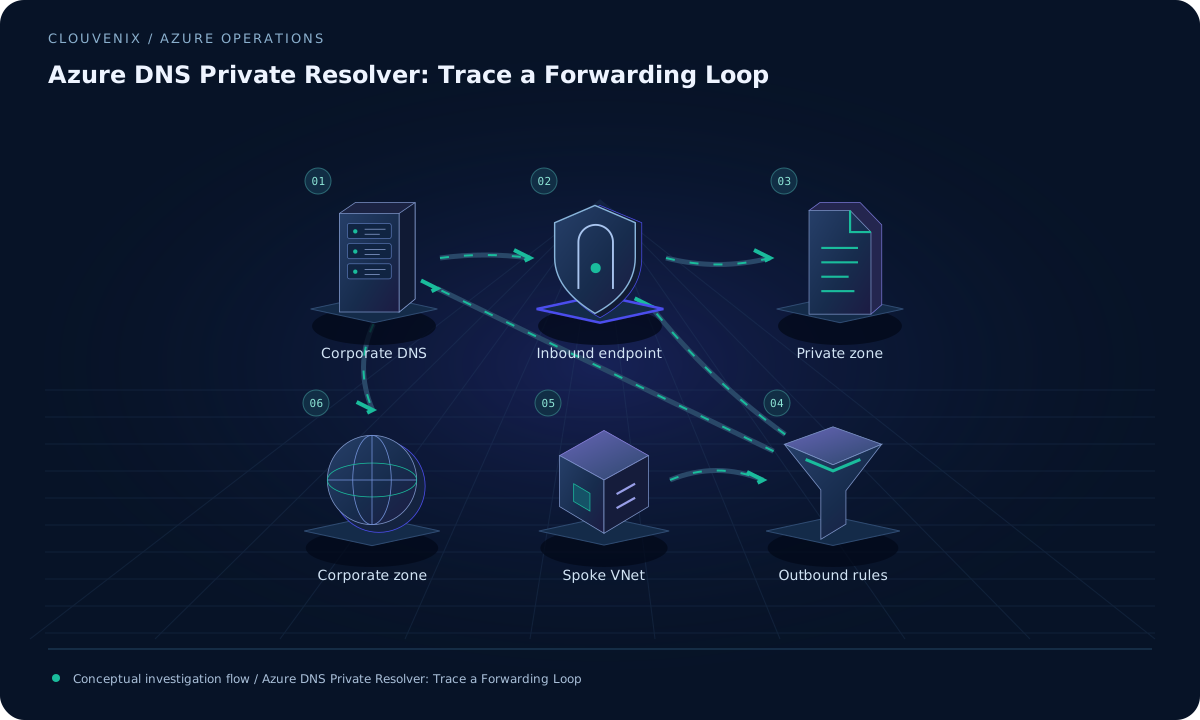 ENGINEERING JOURNAL ↗
Azure DNS Private Resolver: Trace a Forwarding Loop
Trace hybrid DNS queries through Azure DNS Private Resolver by separating inbound endpoints, outbound rules and VNet links, with specific checks for forwarding loops.
Read field note ↗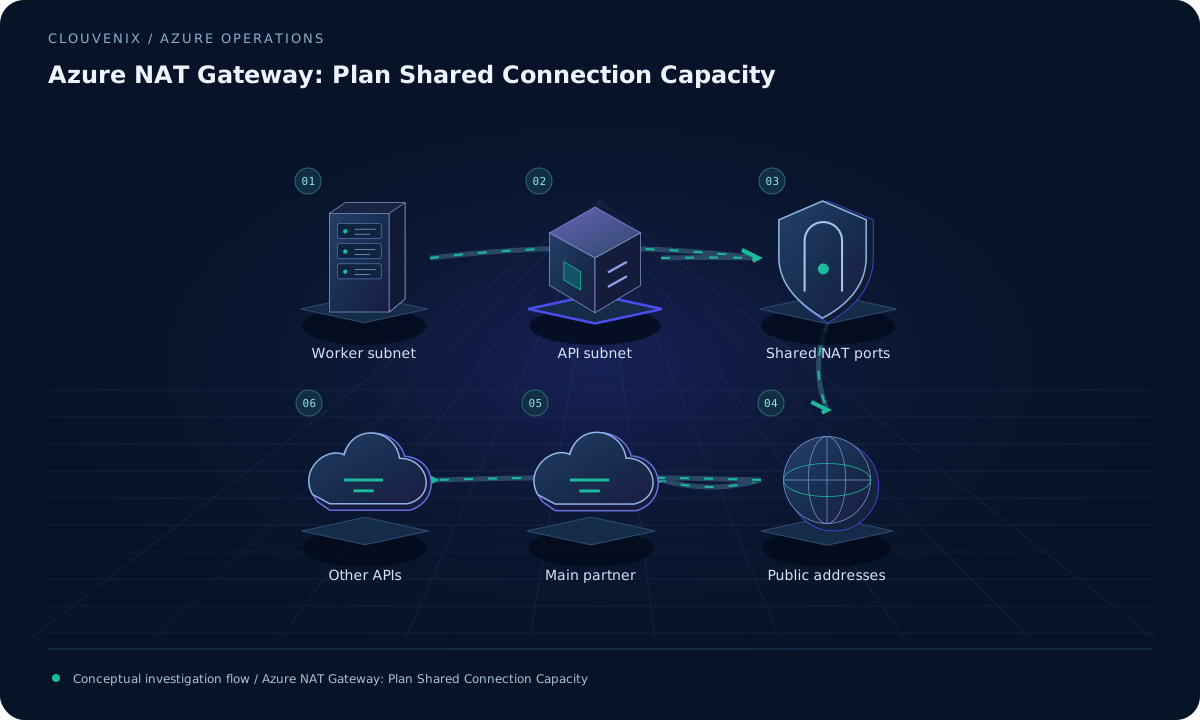 ENGINEERING JOURNAL ↗
Azure NAT Gateway: Plan Shared Connection Capacity
Size Azure NAT Gateway egress around shared subnet demand, repeated connections to the same destination and public address allowlists, then verify the real outbound path.
Read field note ↗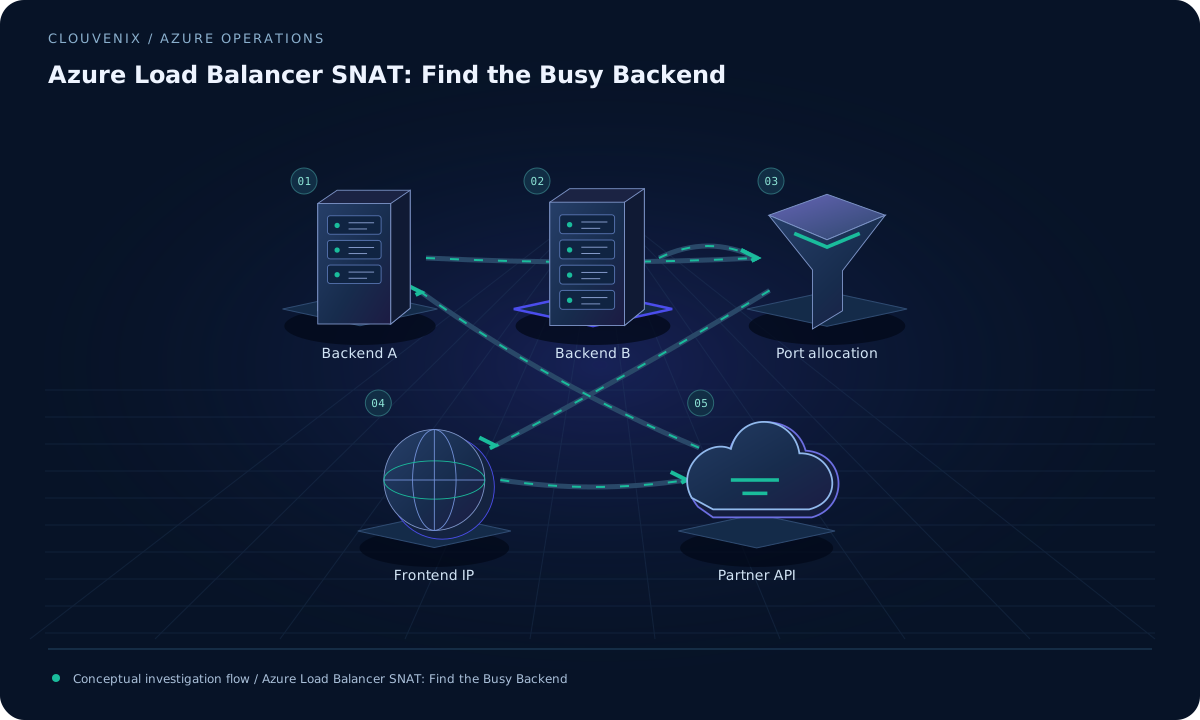 ENGINEERING JOURNAL ↗
Azure Load Balancer SNAT: Find the Busy Backend
Investigate outbound failures on individual Azure Load Balancer backends by comparing allocated and used SNAT ports, connection churn and the outbound rule configuration.
Read field note ↗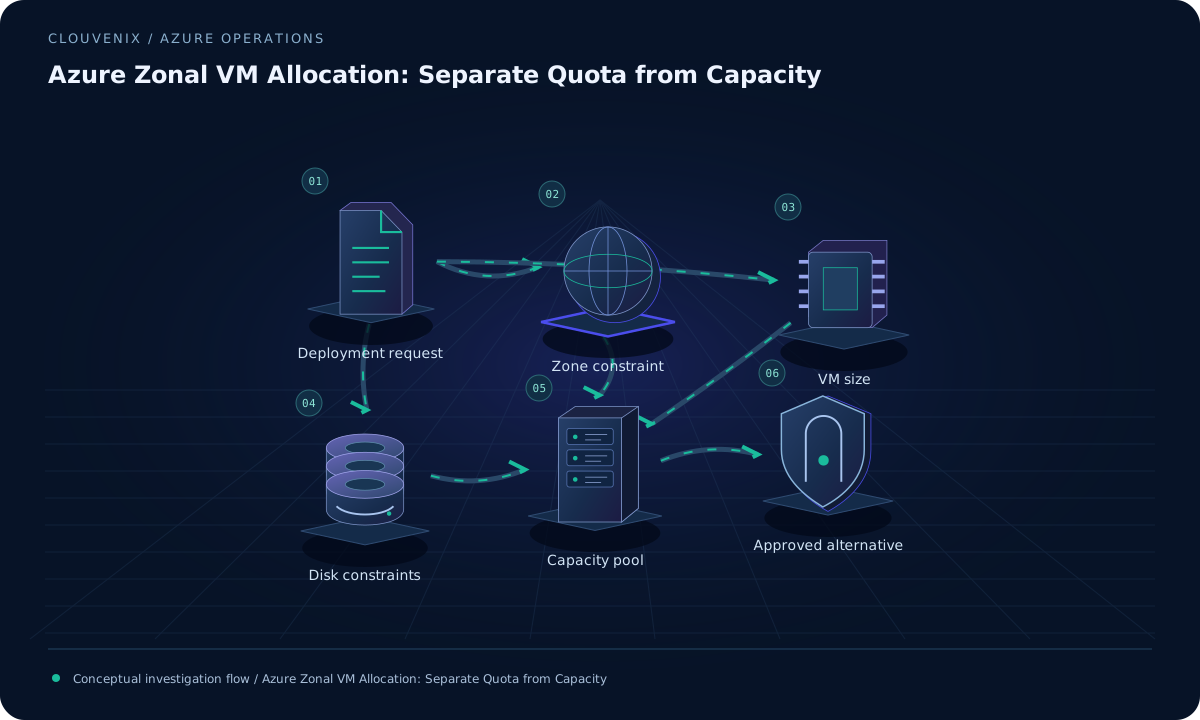 ENGINEERING JOURNAL ↗
Azure Zonal VM Allocation: Separate Quota from Capacity
Diagnose Azure zonal VM allocation failures by separating subscription quota, supported SKU locations and the combined placement constraints that restrict available capacity.
Read field note ↗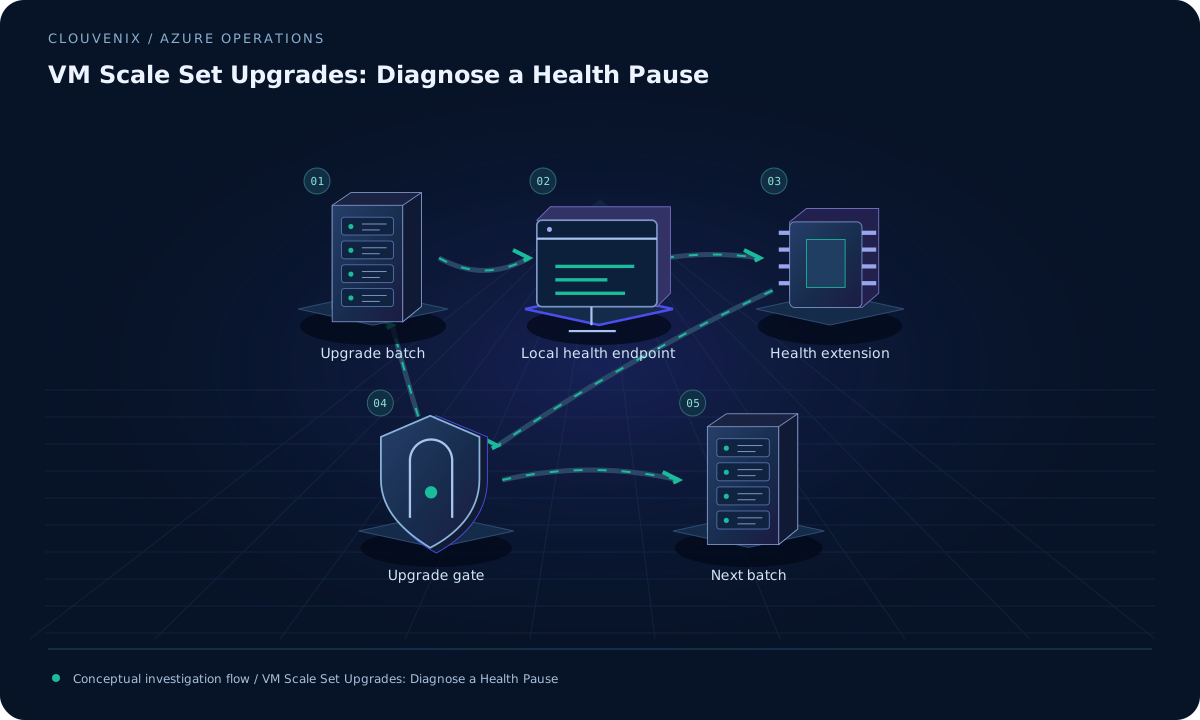 ENGINEERING JOURNAL ↗
VM Scale Set Upgrades: Diagnose a Health Pause
Investigate a paused VM Scale Set rolling upgrade by checking instance health, the Application Health extension, initialization behavior and the batch health thresholds.
Read field note ↗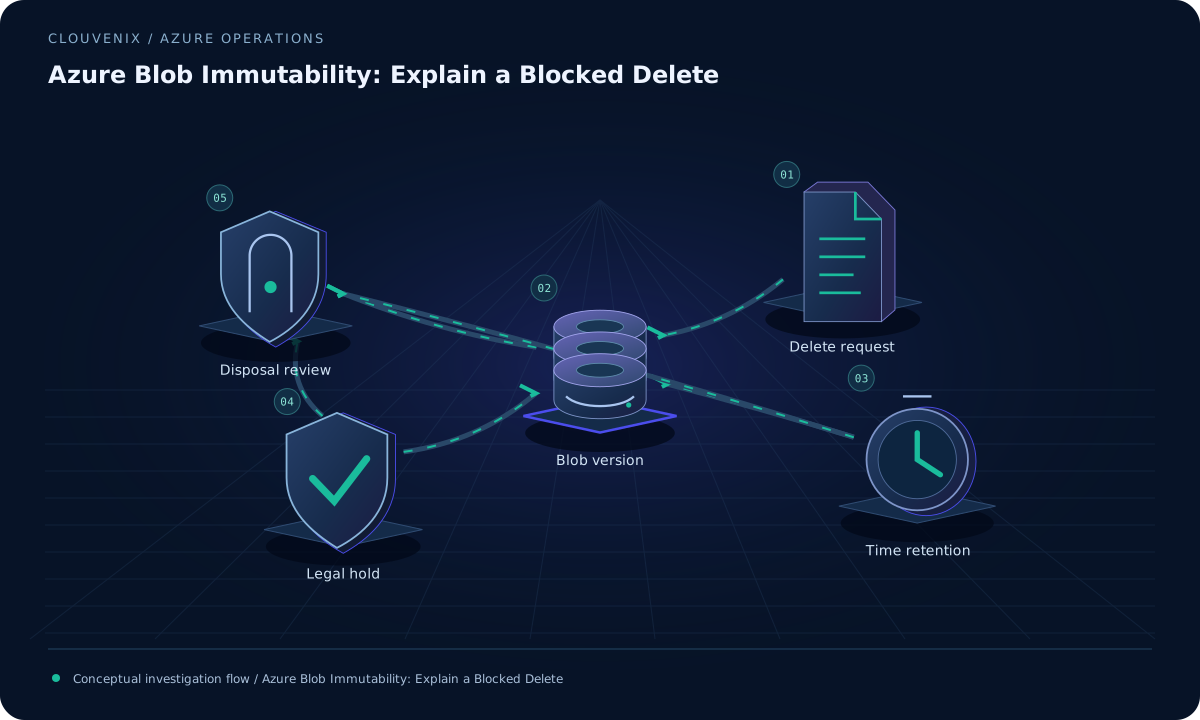 ENGINEERING JOURNAL ↗
Azure Blob Immutability: Explain a Blocked Delete
Identify the effective Azure Blob retention policy or legal hold behind a blocked deletion, document its scope and plan disposal around the permitted retention boundary.
Read field note ↗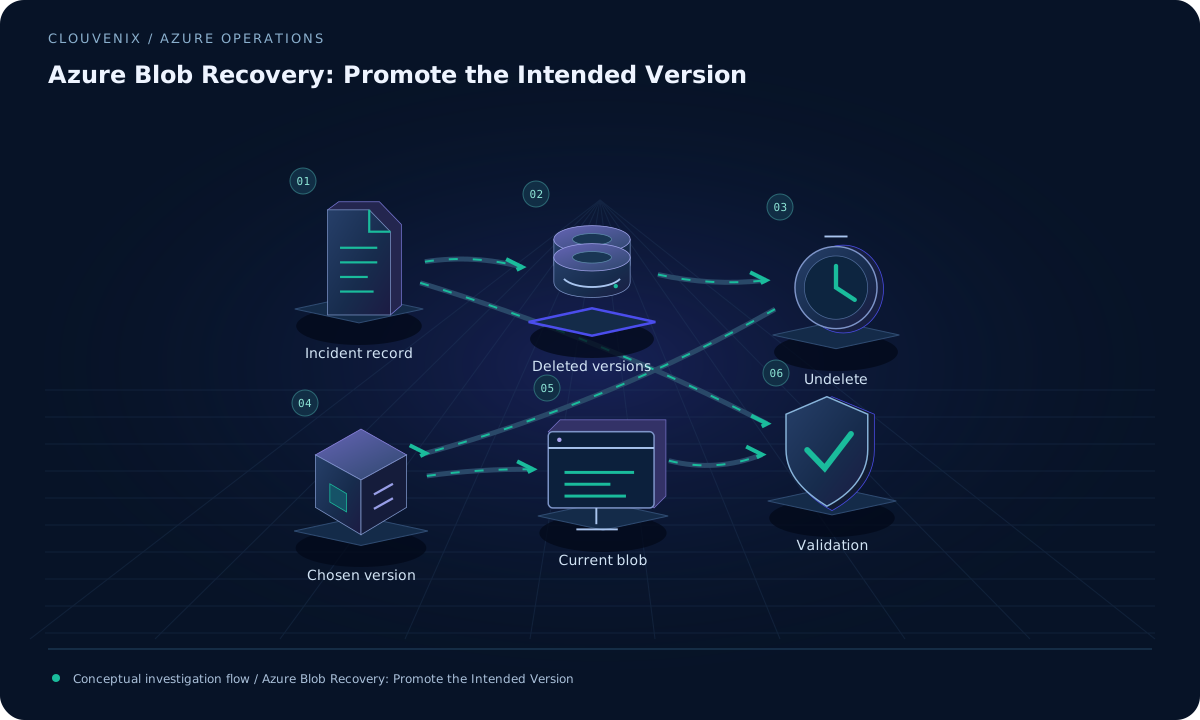 ENGINEERING JOURNAL ↗
Azure Blob Recovery: Promote the Intended Version
Recover an overwritten or deleted Azure blob by distinguishing undelete from version promotion, preserving evidence and validating the restored file before application reuse.
Read field note ↗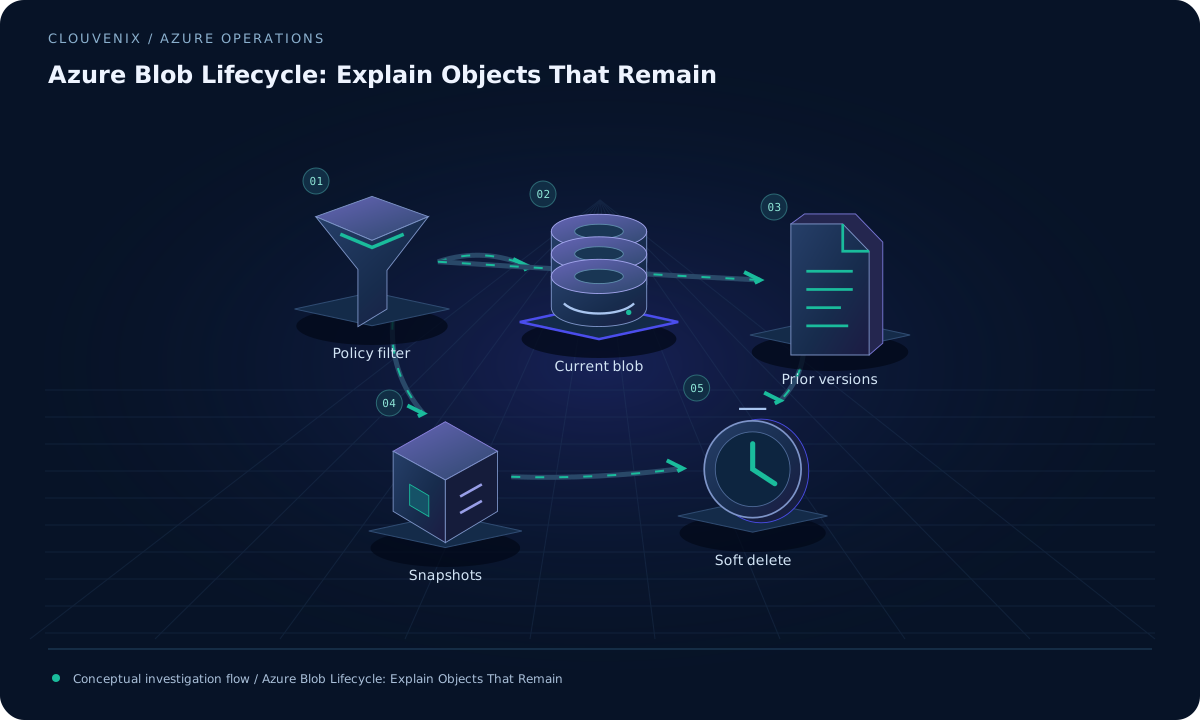 ENGINEERING JOURNAL ↗
Azure Blob Lifecycle: Explain Objects That Remain
Investigate why an Azure Blob lifecycle rule leaves data behind by checking object versions, snapshots, filters, retention windows and the timing of policy evaluation.
Read field note ↗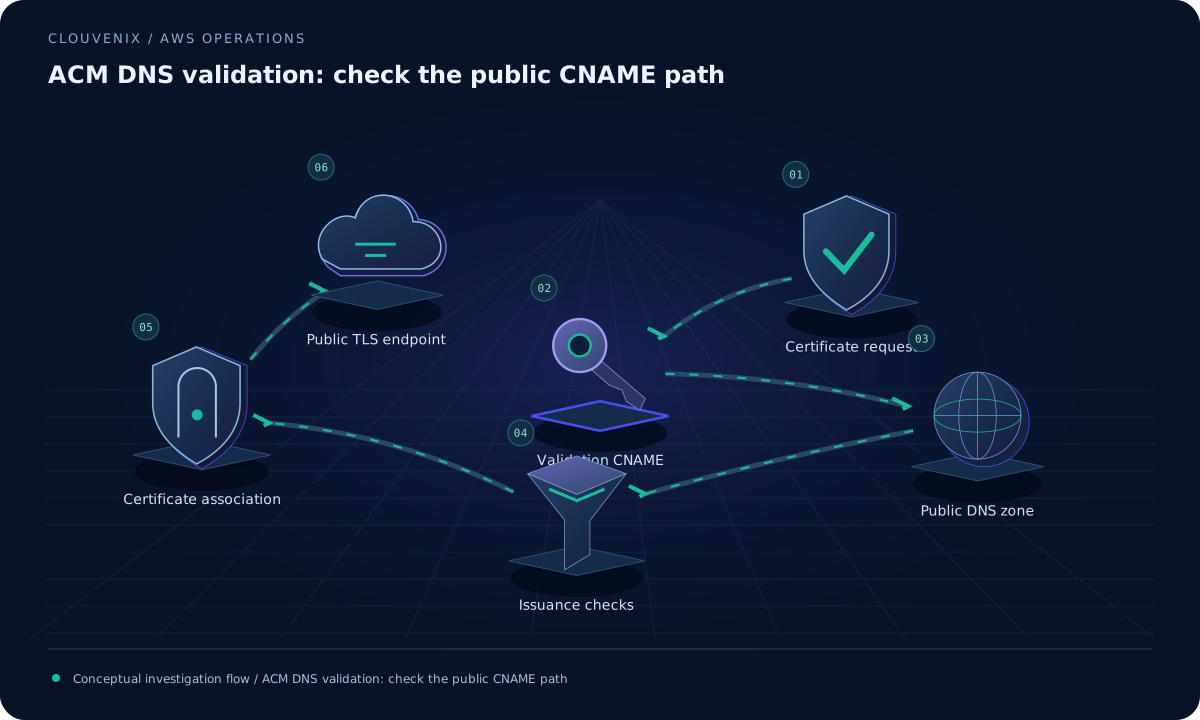 ENGINEERING JOURNAL ↗
ACM DNS validation: check the public CNAME path
Trace ACM certificate validation through public authoritative DNS, exact CNAME names, CAA policy and certificate deployment identity.
Read field note ↗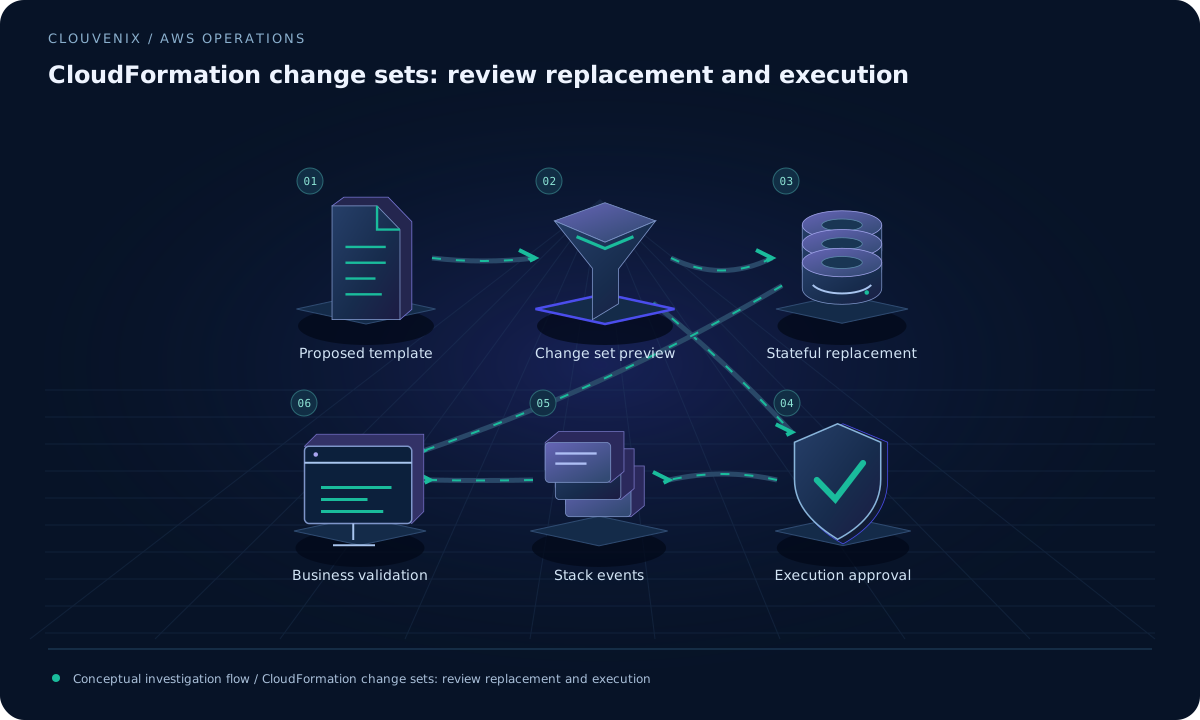 ENGINEERING JOURNAL ↗
CloudFormation change sets: review replacement and execution
Review adds, replacements and deletions in a CloudFormation change set, then validate runtime dependencies and recovery before executing the selected change.
Read field note ↗